
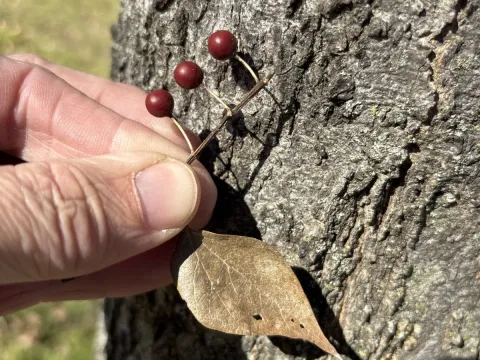
Sugar hackberry
Celtis laevigata
The sugar hackberry (Celtis laevigata) is a deciduous tree belonging to the Cannabaceae family. Native to the southern and central United States, it thrives in a variety of environments, particularly in floodplains and along riverbanks where soil moisture is consistent.
What the section contains
Sugar hackberry
Regarding soil requirements, this species is highly versatile. While it prefers deep, fertile, and moist alluvial soils, it can adapt remarkably well to limestone, rocky terrain, and even heavy clay soils, showing excellent tolerance for varying pH levels.
The tree requires full sun for optimal development. When planted in shaded areas, the growth rate typically decreases, and the canopy density becomes irregular, which reduces its overall aesthetic and structural quality.
In terms of climate, Celtis laevigata demonstrates significant resilience to high temperatures and seasonal drought once established. However, young specimens benefit from supplemental irrigation during dry spells to ensure steady development of their root system.
Maintenance involves routine pruning to maintain a strong central leader and remove crossing or diseased branches. Proper space allocation is essential to allow for full crown expansion as the tree matures.
The primary economic use of the sugar hackberry is its high-quality timber. Known for being heavy, tough, and coarse-textured, the wood is frequently utilized for manufacturing furniture, various tool handles, and sports equipment like baseball bats.
In forestry applications, the sugar hackberry is valued for its relatively fast growth rate and ability to stabilize soil. It is an excellent choice for reforestation projects in degraded riparian zones or as a windbreak species in agricultural landscapes.
The fruit of the sugar hackberry is a small, dry drupe that serves as a vital food source for birds and small mammals, making the tree an essential component for wildlife conservation and habitat restoration.
Beyond timber and wildlife support, the species is highly regarded in urban forestry. Its ability to tolerate air pollution, road salt, and soil compaction makes it a resilient choice for street planting and park landscaping in urban environments.
Harvesting strategies typically involve long-term rotation cycles, where trees are allowed to reach significant diameters to maximize the value of the timber for industrial processing.
Sugar hackberry is prone to powdery mildew, a fungal infection that often appears during periods of high humidity and poor air circulation within the canopy. Improving spacing helps mitigate this risk significantly.
Various insects, such as the hackberry psyllid, often infest the leaves and cause the formation of galls. While these galls are unsightly, they generally do not threaten the long-term health of the tree but can be managed if ornamental standards are strict.
Root rot is a potential threat, especially in sites with poor drainage or chronic waterlogging. Ensuring a well-drained planting site is the most effective preventative measure against such soil-borne pathogens.
Wounds to the bark can lead to wood-decaying fungi. It is crucial to perform all maintenance activities carefully to avoid bruising the trunk, as these injuries act as primary entry points for diseases.
Integrated pest management, including regular monitoring of leaf conditions and timely removal of dead wood, is recommended to ensure the longevity and health of the stand in both forestry and landscape settings.