
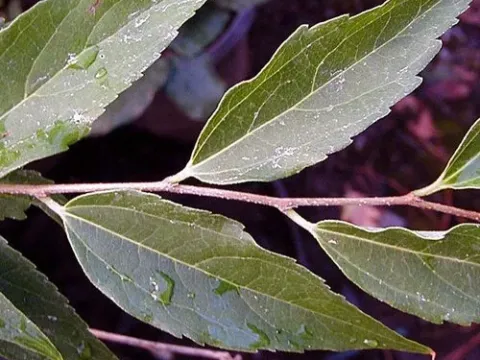
Biondi Hackberry
Celtis biondii
Biondi Hackberry (Celtis biondii) is a deciduous tree belonging to the Cannabaceae family, native to the temperate and subtropical forests of China. It is highly regarded for its resilience and ability to adapt to diverse ecological conditions within its natural habitat.
What the section contains
Biondi Hackberry
The tree thrives in full sun exposure but maintains a degree of shade tolerance during its early developmental stages. Optimal growth is observed in well-draining, nutrient-rich soils that support deep root penetration, preventing stagnation during seasonal rainfall.
In terms of climate, C. biondii shows good tolerance for varying temperatures, although it requires protection from severe wind exposure when newly planted. Its growth rate is moderate, allowing the tree to establish a strong structural foundation over several years.
Botanically, this species is defined by its serrated leaves and a robust branch structure that makes it an excellent choice for ornamental landscaping. The fruit, a small drupe, serves as a vital food source for local bird populations, promoting ecological diversity.
Economically, Biondi Hackberry is utilized for urban forestry due to its high tolerance to air pollution and compaction. Furthermore, its dense wood is often utilized for specialized carpentry, while parts of the plant are historically integrated into botanical research.
The primary threats to Biondi Hackberry include fungal infections such as powdery mildew, which often manifest in areas with poor airflow and high humidity. Maintaining proper tree spacing is a critical agronomic practice to mitigate this risk.
Insect pests, including various aphids and leaf-chewing larvae, may pose a threat to the tree's ornamental value during the spring growth cycle. Integrated pest management (IPM) strategies are recommended to keep populations below damaging thresholds.
Root zone health is essential; over-irrigation can lead to fatal root rot, especially in heavy soils. Agronomists suggest a consistent monitoring schedule for soil moisture levels to ensure the long-term vitality of the root system.
Bark cankers and mechanical damage often serve as entry points for pathogens. Proper pruning techniques, ensuring clean cuts and correct timing, are essential to prevent the spread of infections throughout the canopy.
Preventative care, including the application of organic mulch and slow-release fertilizers, significantly enhances the tree's natural resistance. By fostering a healthy soil microbiome, the vulnerability to common pests is drastically reduced.