
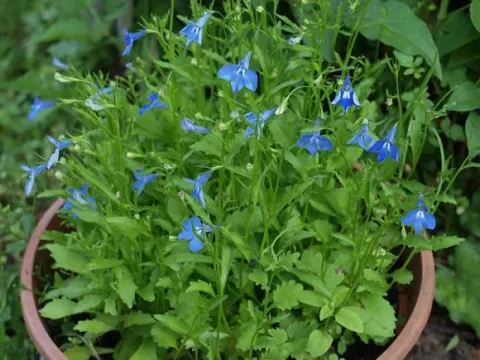
Lobelia erectiuscula
Lobelia erectiuscula
Lobelia erectiuscula belongs to the Campanulaceae family. It is a perennial herbaceous plant known for its distinctive erect, upright growth habit, making it a popular choice for structured garden displays.
What the section contains
Lobelia erectiuscula
Propagation is typically performed via seeds sown indoors in late winter or early spring. Because the seeds are minute, they are surface-sown on a moist substrate and pressed gently without covering, as light is required for germination.
Germination occurs within two weeks under stable conditions with temperatures ranging from 20 to 22 degrees Celsius. Maintaining high humidity is crucial during this initial phase of development.
Once seedlings develop true leaves, they are pricked out into small containers to allow for robust root growth. This hardening-off process is essential before moving the plants to their final outdoor location.
Transplanting into the garden should only take place after the last spring frost. Proper spacing, typically 15-20 cm apart, is recommended to ensure adequate airflow and prevent overcrowding.
The plant thrives in full sun but can tolerate partial shade in hotter climates. Adequate sunlight is vital to maintain the plant's characteristic upright stature and prevent it from becoming leggy.
The soil should be well-draining, loose, and moderately fertile. Lobelia does not tolerate waterlogged conditions, as this significantly increases the risk of root pathogens and eventual decay.
Consistent moisture is key to the success of this crop. Regular watering is required, particularly during dry spells, to maintain turgor in the stems and ensure continuous blooming throughout the season.
Fertilization should be handled with care. Excess nitrogen often promotes excessive foliage growth at the expense of flower production, so a balanced, low-nitrogen liquid feed is preferred.
The species prefers cool, temperate conditions. In areas with extreme heat, providing afternoon shade or ensuring excellent ventilation helps the plant remain vigorous and healthy.
Root rot and crown rot are the primary pathological threats, usually triggered by poor drainage or excessive soil moisture. These diseases can devastate plantings if left unmanaged.
Insect pests, specifically aphids and spider mites, can colonize the plant, especially under dry or stressed conditions. These pests suck sap from the foliage, causing visible curling and yellowing.
Prevention is the best strategy for disease management. This includes strictly following irrigation schedules and ensuring that the planting site has sufficient air circulation to dry foliage quickly.
If an infestation occurs, applications of suitable insecticides or acaricides are required. Organic alternatives like insecticidal soaps can be effective if the infestation is detected early enough.
Integrated pest management, including regular monitoring of the plants, allows for early intervention and ensures that the ornamental quality of the flower bed is preserved throughout the season.