
Legousia falcata
Legousia falcata
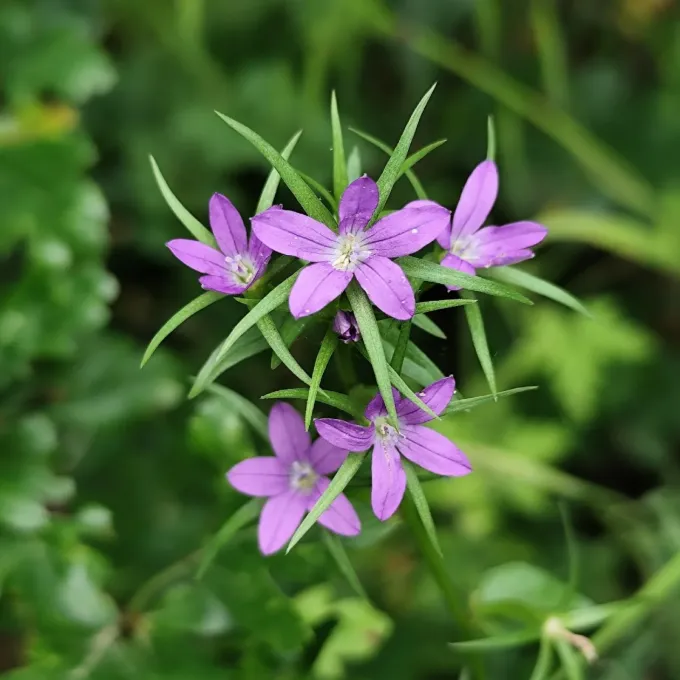
Description
Growing requirements
Legousia falcata belongs to the bellflower family (Campanulaceae). This annual herbaceous plant is primarily found in the Mediterranean basin and throughout Western Asia, adapted to diverse climatic conditions.
The plant thrives in sunny, open locations. It is frequently observed growing in cereal fields, meadows, and fallow lands, where it successfully competes for sunlight and soil nutrients alongside other vegetation.
Regarding soil preferences, it favors alkaline or calcareous soils. It is notably resilient to dry, rocky conditions, which makes it a persistent presence in areas with limited irrigation or poor soil quality.
Botanically, it features a slender stem that can be simple or branched, accompanied by narrow leaves. The flowers are generally pale violet, emerging during the growing season and providing a distinctive appearance to the field.
As an agricultural species, it is often classified as a weed. Its impact on farming involves competing with primary crops, which necessitates effective weed management strategies to maintain high agricultural output.
Main diseases and pests
The main threat posed by Legousia falcata is its competitive nature within commercial cereal crops. Its ability to seed prolifically allows it to colonize field edges and neglected areas very rapidly.
Pests such as aphids and various larvae can damage the plant tissues, but these insects often serve as vectors for viruses that may affect other crops in the family, complicating integrated pest management.
Fungal pathogens may occasionally affect the plant in high-humidity environments, though it generally exhibits strong tolerance to typical seasonal diseases found in its native habitat.
Mechanical control, such as plowing and harrowing, remains the primary method for limiting the spread of this species in fields. These practices must be performed before the plant reaches the seed-setting stage.
Chemical control utilizing herbicides is an option, but it requires careful selection to avoid collateral damage to the primary crop. Crop rotation remains the best long-term strategy for suppression.