

Reference · Crops
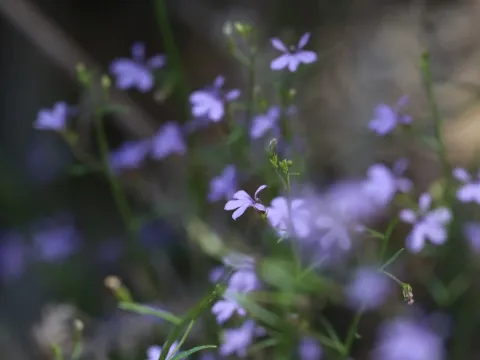
Lobelia
Lobelia L.
Lobelia seeds are exceptionally small and should be sown indoors in late winter or early spring. They require surface sowing on moist, fine-textured seed-starting mix without being covered by soil, as they need light to germinate.
11
items
What the section contains
 Cardinal flower
Lobelia cardinalis L.
Cardinal flower
Lobelia cardinalis L.
 Chickweed-leaved lobelia
Lobelia alsinoides Lam.
Chickweed-leaved lobelia
Lobelia alsinoides Lam.
 Great blue lobelia
Lobelia siphilitica L.
Lobelia alsinoides hybrid
Lobelia alsinoides Lam. (syn. Lobelia trigona Roxb.) x Lobelia erinus L.
Great blue lobelia
Lobelia siphilitica L.
Lobelia alsinoides hybrid
Lobelia alsinoides Lam. (syn. Lobelia trigona Roxb.) x Lobelia erinus L.
 Lobelia erinus
 L.
Lobelia erinus
Lobelia erinus x Lobelia valida
Lobelia erinus
Lobelia erinus L.
Lobelia erinus
Lobelia erinus x Lobelia valida
 Lobelia fulgens
 Willd.
Lobelia fulgens
Lobelia fulgens Willd.
 Lobelia pedunculata
 R. Br.
Lobelia pedunculata
Lobelia pedunculata R. Br.
 Lobelia valida
 L. Bolus
Lobelia valida
Lobelia valida L. Bolus
 Lobelia x speciosa
 Sweet
Lobelia x speciosa
Lobelia x speciosa Sweet
 Pratia angulata
Lobelia angulata G. Forst.
Pratia angulata
Lobelia angulata G. Forst.
Marketplace
Products in this section · 1
Lobelia
Maintaining a temperature of around 20-22 degrees Celsius and high humidity is essential for success. Using a plastic cover or glass lid over the containers helps create the necessary microclimate until the seeds sprout.
Once seedlings emerge, the cover should be removed to allow for better air circulation and to prevent damping-off. Placing the containers in a bright location helps prevent the young plants from becoming leggy.
Pricking out the seedlings usually involves transplanting them in small clumps rather than as individual plants, which ensures a fuller appearance when they are moved to their final containers or flower beds.
Hardening off the seedlings is a mandatory step before transplanting them outdoors. This process should only occur once all danger of frost has passed in late spring to ensure the delicate plants establish well.
Lobelia, belonging to the Campanulaceae family, is a diverse genus of flowering plants. While some species are perennial, most garden varieties are cultivated as annuals due to their intolerance to freezing temperatures.
These plants thrive in full sun but appreciate light shade in regions with extremely hot summers. Adequate light is crucial for maintaining a compact growth habit and encouraging continuous flower production.
The soil should be rich in organic matter, moist, and well-drained. Lobelia prefers a slightly acidic to neutral soil pH. It is important to maintain consistent moisture, as the plant reacts poorly to prolonged drought.
Regular watering is the most vital aspect of Lobelia maintenance. Because of their shallow root systems, these plants can quickly suffer from water stress if the soil surface becomes excessively dry during the heat of the day.
Balanced liquid fertilizers applied every few weeks throughout the growing season provide the necessary nutrients for prolonged blooming. Avoid excessive nitrogen, which promotes vegetative growth at the expense of flowers.
Common pests affecting Lobelia include aphids and spider mites. These insects can quickly colonize the delicate foliage, leading to stunted growth, discoloration, and a decline in overall plant health.
Fungal issues, such as powdery mildew and root rot, are frequent problems when plants are grown in conditions with poor airflow or excessive humidity. Overcrowding in containers or garden beds significantly increases these risks.
Integrated pest management involves monitoring plants regularly and using appropriate insecticidal soaps or systemic pesticides if an infestation is detected. Always follow the product labels for safety and efficacy.
Preventative measures include ensuring good spacing between plants to allow air to circulate freely. Avoiding overhead watering is also recommended to keep the foliage dry and reduce the likelihood of fungal outbreaks.
In cases of severe infection, removing and disposing of the affected plant material is necessary to prevent the spread of spores to healthy plants within the same or neighboring containers.
Lobelia is widely valued in horticulture for its spectacular flowering display. It is an excellent choice for hanging baskets, window boxes, and as a filler in garden borders, offering a long season of vibrant color.
Mid-season shearing is a standard practice to rejuvenate the plants. Cutting back the stems by about one-third encourages a new flush of growth and ensures that the plant continues to produce flowers until the first frosts.
After shearing, it is essential to water and feed the plants to help them recover quickly. This simple maintenance step is the secret to keeping Lobelia looking lush and productive all summer long.
The plant is highly versatile, with varieties ranging from trailing types perfect for baskets to upright forms suitable for edging flower beds. Its intense blue, purple, white, and pink flowers are highly decorative.
While rarely harvested in a traditional agricultural sense, the production of high-quality bedding plants for the ornamental market constitutes a significant segment of the greenhouse and nursery industry.