
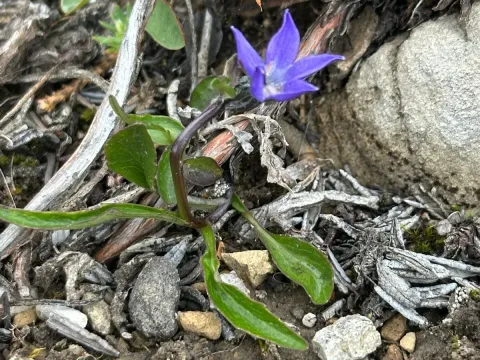
Arctic bellflower
Campanula uniflora
Arctic bellflower, scientifically known as Campanula uniflora, is a perennial herbaceous plant belonging to the Campanulaceae family. It is a rare specimen that is rarely cultivated as a mass crop, serving instead as a niche plant for botanical research and specialized alpine gardening.
What the section contains
Arctic bellflower
The origin of this species is linked to circumpolar regions and high-altitude alpine zones across the Northern Hemisphere. It thrives in extreme environments where few other plants can survive, demonstrating remarkable resilience to freezing temperatures and short, intense growing seasons.
Botanically, the plant is characterized by its miniature stature, typically growing between 5 to 15 centimeters. It features a solitary, nodding, bell-shaped flower with deep blue or violet petals, which serves as a key identifying trait within the Campanula genus.
Climatic requirements are specific: it requires cool temperatures and high light intensity to flourish. Cultivation success depends heavily on emulating its natural habitat, which implies using well-drained, gritty, and mineral-rich soils that do not retain excess stagnant moisture.
Regarding хозяйственное use, the plant holds value primarily in the field of ornamental horticulture for arctic or mountain-themed rock gardens. It is not grown for industrial agriculture, but its biological stability makes it a subject of interest for conservation and alpine biodiversity studies.
The primary threats to this plant are soil-borne pathogens and root rot, which are often exacerbated by poor drainage and excessive irrigation. Maintaining the proper moisture balance is essential to prevent these fungal infections from killing the root system.
Pests that may impact the plant include slugs and aphids, which feed on the succulent foliage and flower buds. Integrated pest management strategies, focusing on physical barriers or environmental control, are preferred over chemical treatments to maintain the health of these sensitive arctic specimens.