
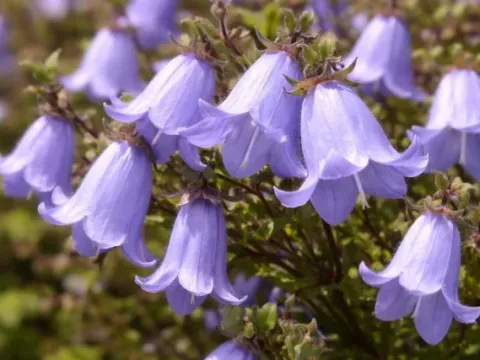
Armenian bellflower
Campanula armena
The sowing of the Armenian bellflower (Campanula armena) is best performed in early spring once the soil has warmed up. Sowing directly into the ground is recommended when the danger of hard frost has passed.
What the section contains
Armenian bellflower
For container cultivation, seeds should be sown in late winter. A crucial step for successful germination is cold stratification, which involves keeping the seeds at low temperatures for two to three weeks before moving them to a warmer area.
Since the seeds are extremely small, they should not be buried deeply. Instead, surface sowing on top of a moist, sterile potting medium is ideal, followed by a light covering of fine sand to maintain humidity.
During the germination phase, keep the temperature consistent around 18–20 degrees Celsius. Ensure that the soil remains moist but not saturated, using a spray bottle for gentle watering to avoid washing the seeds away.
Once seedlings have developed a pair of true leaves, they should be transplanted into individual pots. Harden them off gradually before moving them to their permanent outdoor location in late spring.
The Armenian bellflower belongs to the Campanulaceae family. It is a perennial herbaceous plant native to the rocky and mountainous regions of Armenia, adapting well to specific alpine-like conditions.
This crop requires well-drained, porous soil with an alkaline or neutral pH level. It does not tolerate heavy, clay-rich soils that retain too much moisture, as this often leads to fatal root issues.
Full sun is essential for the healthy development of this species. While it can withstand partial shade, consistent exposure to sunlight is necessary for producing dense, vibrant flowers and strong stems.
Regarding climate, the plant is hardy and appreciates the natural cooling cycles of its native environment. It is well-suited for temperate regions, provided it has adequate winter protection in harsher climates.
Minimal fertilization is required, as the plant is adapted to nutrient-poor soils. Over-fertilization, especially with high-nitrogen formulas, can lead to excessive foliage growth at the expense of floral production.
Common threats to the Armenian bellflower include fungal diseases caused by poor drainage and excessive air humidity. Root rot is particularly prevalent in poorly managed garden beds during the rainy season.
Slugs and snails are the most frequent pests, as they feed on the succulent leaves of the young plants. Implementing physical barriers like crushed shells or eggshells around the base can help deter them.
Aphids may occasionally infest the flowering stems. Regular monitoring during the growth season is recommended, as early detection allows for effective control using mild insecticidal soaps or neem oil.
Powdery mildew can affect the leaves during dry, hot spells followed by humid evenings. Maintaining adequate spacing between plants is the best preventative measure to ensure good air circulation.
Sanitation is vital for disease prevention. Removing dead foliage in the autumn and clearing garden debris reduces the likelihood of overwintering pathogens that could infect the plant in the spring.