
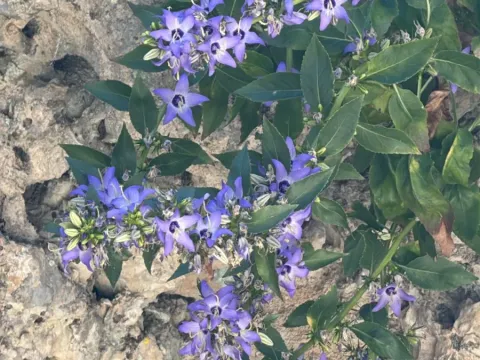
Balkan bellflower
Campanula versicolor
The Balkan bellflower (Campanula versicolor) is a member of the Campanulaceae family. It is a perennial herb native to the Balkan Peninsula, naturally thriving in crevices of limestone rocks and stony slopes across the Adriatic region.
What the section contains
Balkan bellflower
For successful cultivation, this species requires well-drained, alkaline soils. It is highly adapted to rocky substrates, making it an excellent choice for rock gardens and areas with poor soil quality where other plants might struggle.
The plant performs best in full sun or partial shade. Exposure to direct sunlight is essential for maintaining the plant's structural integrity and the vibrant coloration of its unique funnel-shaped flowers.
Botanically, it is distinguished by erect stems that can reach up to 100 cm in height. The foliage is generally basal and cauline, with serrated margins, supporting large panicles of beautiful, variegated flowers ranging from white to deep purple.
Economically and horticulturally, the plant is primarily used as an ornamental. It is favored for its architectural presence in perennial borders, cliff-side gardens, and as a long-lasting cut flower in professional floristry.
The primary threat to the Balkan bellflower is root rot, which typically develops in heavy, waterlogged soils. Maintaining excellent drainage is the most critical factor for ensuring long-term plant health.
Slugs and snails represent the most common pest pressure. These mollusks feed on the tender foliage and stems, particularly during cool, moist spring weather. Manual removal or bait stations are effective management techniques.
Aphids can cause damage during the flowering stage by clustering on the buds. Integrated pest management strategies, including the use of neem oil or insecticidal soaps, are recommended for maintaining plant vigor.
Powdery mildew may appear on the foliage if the plants are crowded and lack sufficient air circulation. Proper spacing during initial planting is the best preventive measure against this fungal disease.
In humid climates, botrytis or gray mold can affect the flowers and stems. Keeping the foliage dry during irrigation and removing spent blooms promptly helps minimize the risk of infection.