
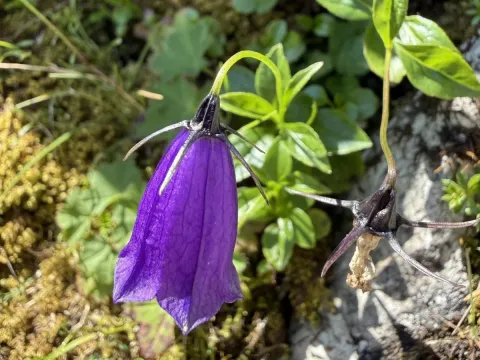
Dark bellflower
Campanula pulla
Sowing seeds of the dark bellflower (Campanula pulla) is best done in late autumn or early spring to allow for natural stratification, which is essential for uniform germination of this high-altitude species.
What the section contains
Dark bellflower
For indoor propagation, sow the seeds on the surface of a well-draining, moist seed-starting mix. Do not cover them with soil, as they require light to germinate effectively in the early stages.
Keep the seed containers in a cool environment (approximately +2 to +5 degrees Celsius) for several weeks. This cold treatment is vital to break seed dormancy and ensure a higher percentage of germination.
Once seedlings have developed two true leaves, they should be carefully pricked out and transferred into individual pots. Handle them with care to avoid damaging the delicate root structure.
Transplanting into the garden should occur once the danger of frost has passed in late spring. Space plants approximately 15–20 centimeters apart to promote airflow and healthy root development.
As a member of the Campanulaceae family, the dark bellflower thrives in cool, alpine conditions. It prefers locations with bright but filtered light, avoiding harsh, direct afternoon sun.
The soil must be light, gritty, and exceptionally well-drained. If planting in heavier soils, incorporate sand, crushed stone, or gravel into the planting hole to prevent water accumulation.
Soil pH should ideally be neutral or slightly alkaline. The plant does not tolerate waterlogging, which often leads to crown rot; therefore, planting on a slight slope or in raised rock beds is highly beneficial.
Water the plants consistently but moderately. During dry spells, provide enough moisture to keep the soil slightly damp, ensuring the foliage stays dry to avoid moisture-related diseases.
The dark bellflower is an excellent candidate for rock gardens and borders. It performs best in regions with mild summers and cold winters, reflecting its natural habitat in the Eastern Alps.
Slugs and snails are the most significant pests for the dark bellflower, particularly during wet and humid weather. They can cause substantial damage to the leaves and developing flower buds.
Powdery mildew can appear as a white, dusty coating on the leaves, usually triggered by poor ventilation and high humidity. Regular thinning of plants helps prevent this fungal issue.
Root rot is a major threat caused by poor drainage or overwatering. Once established, it is difficult to treat, making preventative soil management the most effective strategy for plant health.
Aphids might colonize the tender tips of the plants, causing stunted growth. If found, they should be treated with insecticidal soap or a gentle blast of water to dislodge them.
Maintaining a clean garden bed by removing leaf litter and debris helps minimize the environment for pests and pathogens, keeping the bellflower patch healthy and visually appealing throughout the season.