
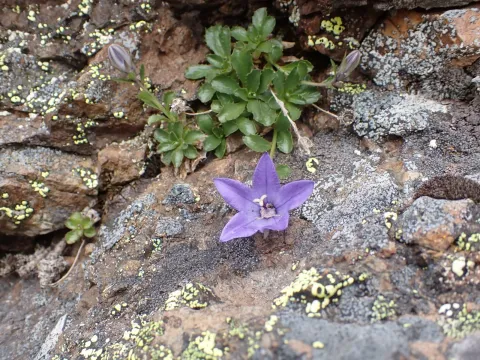
Piper's Bellflower
Campanula piperi
Piper's Bellflower (Campanula piperi) is a distinctive perennial herb belonging to the Campanulaceae family. It is an extremely rare alpine endemic found exclusively in the craggy crevices of the Olympic Mountains in Washington, USA.
What the section contains
Piper's Bellflower
Cultivation of this species is intended primarily for specialist rock garden enthusiasts. The plant thrives in cool, alpine environments and fails to perform well in hot, humid lowlands, requiring high light intensity and perfect ventilation to mimic its natural montane habitat.
The substrate must be strictly inorganic or low-organic, composed mainly of fine grit, granite chips, and sharp sand. This composition ensures the necessary drainage, as the plant is highly susceptible to root decay when subjected to stagnant water.
Botanically, it forms tight, spreading mats of tiny, shiny, serrated leaves. During the blooming season, the foliage is obscured by star-shaped, vibrant lavender-blue flowers that possess a crystalline appearance, which is highly sought after by collectors.
Technical maintenance involves meticulous watering during the active growth phase, followed by a dry dormancy period in winter. Ensuring the crown of the plant stays dry during winter months is essential for the survival and longevity of the individual specimens.
The primary threats to Campanula piperi in cultivation are soil-borne pathogens, specifically Pythium and Phytophthora species, which thrive in moist environments.
Pests that pose significant risks to the delicate foliage include slugs and snails, which can cause severe damage overnight. In greenhouses, whiteflies and spider mites may also infest the plants, necessitating precise integrated pest management strategies.