
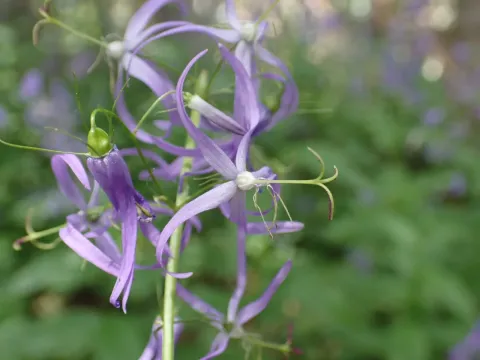
Pichler bellflower
Campanula pichleri
The Pichler bellflower is a beautiful perennial herb belonging to the Campanulaceae family, known for its compact habit and vibrant flowering.
What the section contains
Pichler bellflower
Propagation is primarily achieved through seeds, which should be sown in early spring in well-drained seed trays using a fine, sandy substrate.
The seeds are very fine and require surface sowing; they should only be lightly pressed into the soil to ensure proper contact without being buried.
Germination typically occurs within two to four weeks when maintained at a steady temperature between 18 and 20 degrees Celsius in a bright location.
Once seedlings develop their first true leaves, they should be carefully transplanted into individual pots to strengthen their root system before final placement.
This species thrives in sunny to partially shaded locations and is perfectly suited for rock gardens, stone walls, or alpine troughs where drainage is optimal.
It demands a gritty, well-drained soil that is neutral to slightly alkaline, reflecting its natural habitat on limestone rocks and slopes.
Watering should be managed with caution; the plant needs consistent moisture during the growing season but must never sit in waterlogged soil.
Good air circulation is essential for the health of the plant, as stagnant air around the foliage can contribute to the development of unwanted fungal diseases.
During the winter months, it is advisable to ensure the plant is protected from excessive moisture, particularly by providing an overhead shelter in cold climates.
Root rot remains the most serious threat to the Pichler bellflower, usually triggered by poor drainage or overwatering in heavy, clay-based soil types.
Powdery mildew can affect the leaves during periods of high humidity and poor ventilation, often requiring an adjustment in plant spacing or leaf treatment.
Slugs and snails are the primary pests that feed on the succulent foliage and buds, causing significant aesthetic damage to the plant during the spring.
Integrated pest management, including the use of gravel mulch, can significantly reduce the access of gastropod pests to the crown of the plant.
Regular monitoring for symptoms of decay is recommended to catch infections early, allowing for quick removal of affected parts and treatment with fungicides.