
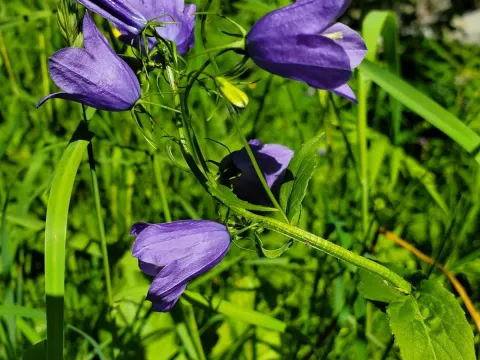
Rhomboid bellflower
Campanula rhomboidalis
The rhomboid bellflower (Campanula rhomboidalis) is a distinguished member of the Campanulaceae family, native to the mountainous regions and alpine meadows of Central Europe.
What the section contains
Rhomboid bellflower
Botanically, it is recognized by its sturdy, erect stems and distinct rhomboid-shaped leaves with serrated margins, which serve as an attractive backdrop for its bell-shaped violet-blue flowers.
This species thrives in cool, temperate climates, favoring sites with partial shade that mimic the natural moisture and light conditions of its mountain habitat.
The ideal soil for this cultivar is humus-rich, well-draining, and neutral to slightly acidic, ensuring that roots do not become waterlogged during dormant periods.
Cultivation success depends heavily on maintaining consistent soil moisture, as the plant exhibits low tolerance for drought and excessive heat stress.
Propagation is primarily achieved through seeds, which require a period of cold stratification to break dormancy and ensure uniform germination.
Sowing in late autumn or early spring is recommended, with seeds placed on the surface of the growing medium rather than being buried, as they need light to germinate.
During the early growth stages, maintaining a stable temperature around 18 degrees Celsius and high humidity under a transparent cover is beneficial for seedling development.
Once seedlings have developed several true leaves, they should be transplanted into individual pots to strengthen their root systems before moving to an outdoor garden bed.
When planting outdoors, spacing should be set at approximately 30 centimeters to allow for adequate air circulation and growth room as the plants mature.
The plant is susceptible to various fungal pathogens, specifically powdery mildew and root rot, which typically arise in conditions of high humidity and poor site drainage.
Common garden pests such as slugs and snails represent a major threat, particularly to young foliage and tender stems during wet spring conditions.
Aphids can occasionally cluster on the flower buds, potentially causing distortion and reducing the overall quality of the floral display.
Effective management involves consistent hygiene, including the removal of dead plant material and the use of physical barriers to prevent snail infestations.
Early intervention with organic or chemical treatments, depending on the severity of the pest pressure, is essential to maintain plant health throughout the season.
While primarily grown for decorative purposes, harvesting flower stems for floral arrangements should be done during the early morning hours when turgor pressure is at its highest.
To prolong the vase life of cut flowers, it is advised to remove lower leaves that might sit below the water level and to use clean water with a floral preservative.
For seed collection, the fruiting capsules should be harvested once they begin to turn brown and dry on the plant, indicating that the seeds have reached maturity.
Proper harvesting of seeds involves placing the capsules in a paper bag to catch the small seeds as the pods burst open upon further drying.
Ensuring that the plant has sufficient time to recover after harvesting is critical, as it requires adequate leaf area to store nutrients for the following year's growth.