
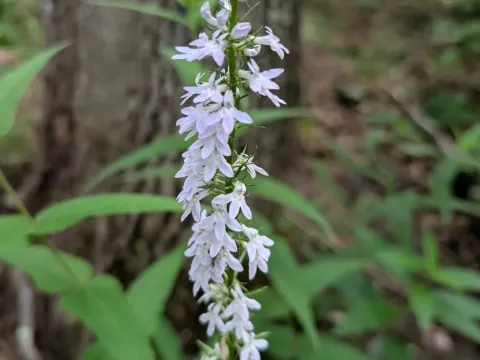
Palespike lobelia
Lobelia spicata
Palespike lobelia (Lobelia spicata) is a herbaceous perennial belonging to the Campanulaceae family, native to the prairies and meadows of North America.
What the section contains
Palespike lobelia
Propagation is typically carried out by sowing seeds on the soil surface, as they require light to germinate effectively within standard greenhouse conditions.
The seeds should be kept moist and maintained at a steady temperature of around 20 degrees Celsius to ensure high germination rates before transplantation.
Seedlings develop slowly, requiring a stable environment until they are robust enough to be moved outdoors into the prepared landscape beds.
Spacing should be managed to ensure adequate ventilation, which is crucial for preventing humidity-related issues as the plants begin to mature.
This species thrives in full sun but can tolerate partial shade, making it a versatile choice for native gardens and naturalistic meadow plantings.
Soil requirements include well-draining textures, though the plant is notably more tolerant of varying moisture levels than some other Lobelia species.
The plant performs best in slightly acidic to neutral soils enriched with organic matter, which supports its vigorous vertical inflorescence development.
Regular monitoring of soil moisture is recommended during dry spells to maintain consistent growth rates and prevent premature wilting of the spikes.
Mulching around the base of the plant can help retain ground moisture and suppress weed growth, which is essential for healthy long-term development.
Fungal pathogens such as root rot remain the primary concern, typically triggered by poor drainage or prolonged periods of waterlogged soil conditions.
Leaf spots caused by various fungal strains can appear if the foliage remains wet for extended periods, necessitating careful irrigation management.
Common insect pests include aphids and mites, which can infest the succulent stems and flower buds, significantly reducing the visual appeal.
Effective management strategies involve early detection, pruning of infected stems, and the application of targeted biological control measures when necessary.
Maintaining adequate airflow between individual plants is the most effective cultural practice to mitigate the risk of powdery mildew and other fungal diseases.