
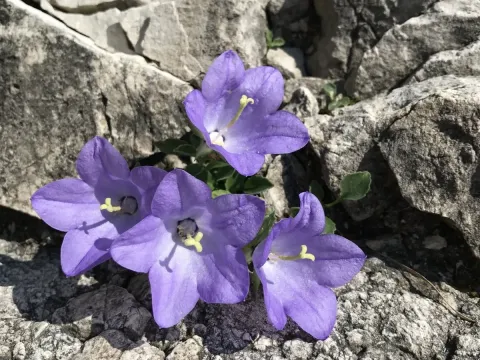
Rainer's Bellflower
Campanula raineri
Seeds of Campanula raineri are best sown in autumn or early spring following a period of cold stratification. Since the seeds are extremely small, they should be surface-sown on a well-draining substrate and barely pressed in, rather than buried deep.
What the section contains
Rainer's Bellflower
For indoor propagation, maintain a temperature of approximately +18 to +20 degrees Celsius. Consistent moisture is vital during the germination phase, though the surface must never become waterlogged to prevent damping-off.
Germination is often irregular, so one must monitor the seedling trays for several weeks. Once the plants reach the stage of having true leaves, they should be carefully pricked out into individual pots to foster strong root development.
When sowing in open ground, it is preferable to use the seedling method to ensure young plants are protected until they have established a robust root system. Choosing a location with morning sun and light afternoon shade is ideal.
Transplanting to the permanent site requires great care to avoid disturbing the delicate roots. Planting in crevices or well-prepared rock garden pockets provides the best chance for long-term survival.
Rainer's Bellflower belongs to the Campanulaceae family and is native to the limestone cliffs of the Alps. In cultivation, it demands a calcium-rich, highly porous soil that allows for rapid drainage.
The plant thrives in cool, fresh climates and suffers in humid, lowland heat. It is essential to replicate its natural habitat by using a grit-heavy, calcareous soil mix that prevents water from ever settling around the crown.
Light requirements include high intensity, but in warmer regions, the plant needs light protection from the scorching midday sun. Positioning the plant in a north or east-facing rock crevice can help manage temperature stress.
Fertilization should be kept to a bare minimum. Overfeeding can lead to lush, weak growth that makes the plant more susceptible to diseases and diminishes its naturally compact alpine form.
Mulching the area around the plant with limestone chippings is a critical cultural practice. This keeps the crown dry and maintains the necessary cool temperature at the roots, which is essential for this alpine species.
Root rot is the most common threat to Campanula raineri and is almost always caused by improper drainage or excessive soil moisture. Once root health is compromised, the plant often fails to recover.
Slugs and snails are major pests that can devour young shoots and foliage overnight. Using physical barriers, such as copper tape or crushed grit around the plant, is recommended to manage these threats effectively.
Powdery mildew may occur if air circulation around the plants is poor. Thinning out competing vegetation and ensuring the plant is in an airy, well-ventilated location is the best way to prevent fungal outbreaks.
Aphids can occasionally infest the flower stalks, leading to stunted growth or discolored buds. Early intervention with gentle insecticidal soaps or biological controls can help preserve the plant's decorative appearance.
During the dormant winter season, excessive rain combined with freezing temperatures can cause rotting of the foliage. Providing a dry overhead cover during particularly wet winters can significantly increase the plant's longevity.