
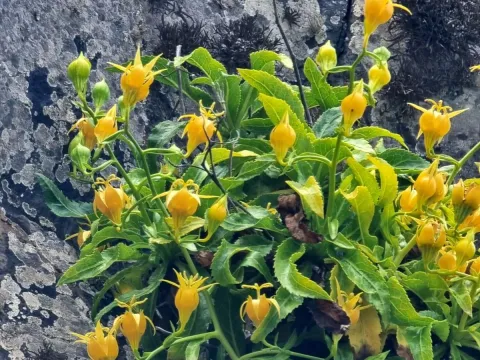
Musschia
Musschia
Propagating Musschia is primarily achieved through seeds, which require specific conditions for germination to ensure successful seedling development.
What the section contains


Musschia
Sowing should ideally occur in early spring, allowing the plants to utilize the increasing light levels for robust initial growth and establishment.
Seeds are placed on the surface of a sterile, well-draining substrate and kept moist under glass or plastic to maintain high atmospheric humidity.
Seedling growth is characteristically slow, necessitating patient care and protection from intense direct light until the plants are sufficiently mature.
Vegetative propagation using side shoots is also possible, provided that the cuttings are kept in a humid environment until roots are fully developed.
Musschia is a genus of flowering plants in the Campanulaceae family, native to the island of Madeira, thriving in rocky, high-altitude habitats.
The plants require a highly porous, well-draining soil mix with a neutral pH to mimic their natural growing conditions and prevent root rot.
Optimal growth is achieved in bright, indirect sunlight, as the foliage is prone to scorching when exposed to harsh, unfiltered solar radiation.
A consistent ambient temperature between 18 and 24 degrees Celsius is ideal, with careful attention given to avoiding cold drafts and extreme fluctuations.
Watering must be performed with precision; the soil should be kept barely moist, allowing the surface to dry slightly between irrigation sessions.
The primary threats to Musschia cultivation are fungal infections, which are often triggered by stagnant air and excessive soil moisture levels.
Root and crown rot are frequent issues caused by poor drainage or the use of heavy, water-retentive substrates that suffocate the root system.
Pests such as spider mites and aphids are known to target the foliage and floral stalks, particularly in indoor environments with low humidity.
Mealybugs can also infest the plant, hiding in the leaf axils and extracting vital sap, which significantly weakens the overall vigor of the specimen.
Effective management includes maintaining good air circulation, regular monitoring, and the prompt application of appropriate control measures at the first sign of infestation.