
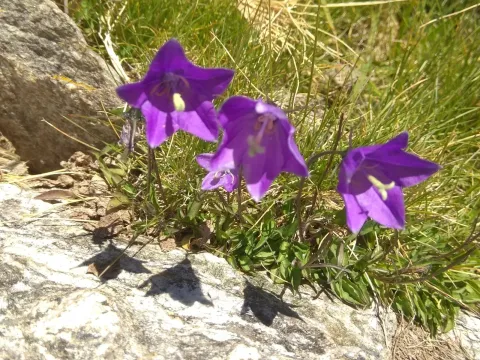
Herminio's bellflower
Campanula herminii
Herminio's bellflower (Campanula herminii) is a perennial herbaceous plant belonging to the Campanulaceae family, native to the alpine regions of the Iberian Peninsula.
What the section contains
Herminio's bellflower
Botanically, it is characterized by its compact, prostrate growth habit, which allows it to thrive in nutrient-poor rocky crevices and mountain slopes.
For successful cultivation, the plant requires excellent drainage and a substrate that mimics its natural high-altitude environment, typically neutral to slightly acidic.
The climate requirements include full exposure to sunlight and cool temperatures, as the plant struggles significantly in regions with high heat and humidity.
In gardening, this species is highly regarded for its aesthetic value in rock gardens and alpine beds, where it creates dense mats of violet-blue flowers.
The primary threat to the health of the plant is root rot, usually caused by stagnant water or soil that does not drain quickly enough.
Slugs and snails are the most notorious pests for this species, frequently causing severe damage to the foliage and buds during moist weather conditions.
Aphids can also pose a problem during the flowering season, clustering on the developing stalks and potentially weakening the overall plant vigor.
Powdery mildew and various leaf-spot fungi can occur if the planting site lacks sufficient air circulation or if there is excessive overhead watering.
Preventive care involves choosing a breezy location, ensuring appropriate spacing, and careful irrigation management to keep the crown dry.