
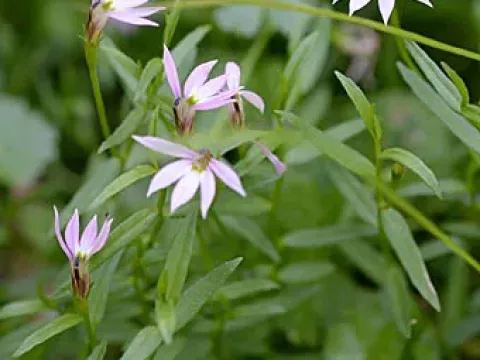
Griffith's lobelia
Lobelia griffithii
Griffith's lobelia (Lobelia griffithii) is a member of the Campanulaceae family. While it possesses perennial characteristics in its native habitat, in many agricultural and gardening contexts, it is treated as an annual or biennial plant depending on the regional climate zone.
What the section contains
Griffith's lobelia
The sowing process begins indoors during late winter to early spring. Because the seeds are extremely small and dust-like, they must be surface-sown on a fine seed-starting mix. The seeds require light to germinate, so they should never be covered with soil or growing medium.
Temperature management is critical during the initial development stages. The germination environment should be kept consistently warm, ideally between +20°C and +22°C. Adequate moisture must be maintained by covering the trays with clear plastic or glass to create a localized humid environment.
Once seedlings develop their first true leaves, they are typically pricked out in small clumps rather than individually. This communal planting method encourages a more robust root system and helps the young plants establish more quickly when they are later transplanted to their permanent location.
Transplanting to the outdoors should only occur after all risks of frost have passed. These plants prefer a bright, sunny position in the garden, though they will appreciate some light shade during the peak of summer in hotter climates to prevent the substrate from drying out too rapidly.
The ideal soil for Griffith's lobelia is rich, well-draining, and slightly acidic to neutral in pH. Poorly draining soils must be amended with grit or perlite to prevent the roots from sitting in stagnant water, which often leads to rapid decline and plant death.
Consistent moisture is the hallmark of proper care for this culture. Regular irrigation is necessary throughout the growing season, particularly during the flowering phase. Even short periods of extreme drought can lead to flower drop and the cessation of vegetative growth.
Fertilization should be handled with caution. A balanced, low-nitrogen liquid fertilizer applied every two weeks is recommended to support continuous blooming. Excess nitrogen will cause the plant to prioritize foliage production, resulting in a lush green look with significantly fewer flowers.
The plant thrives in moderate temperature ranges. While it can withstand fluctuations, prolonged exposure to temperatures below +10°C will significantly slow metabolic rates and can damage the soft, succulent-like tissue of the stems and leaves.
Garden hygiene, including light hoeing around the base of the plants, helps maintain soil aeration. Careful attention should be paid during this process to ensure the shallow root system is not damaged by tools, as the roots are quite delicate and sensitive to mechanical stress.
Root rot is the most significant threat to the health of Griffith's lobelia, usually resulting from over-irrigation or heavy, waterlogged soils. Prevention involves careful water management and ensuring that the planting area has excellent natural or artificial drainage.
Powdery mildew is a common fungal disease that appears when air circulation is poor or humidity levels are too high. To mitigate this risk, plants should be spaced appropriately to allow for airflow, and overhead watering should be avoided to keep the foliage dry.
Aphids and spider mites are the most frequent pests that affect this species. These small insects sap the energy from the leaves and can cause significant deformity if left unchecked. Frequent monitoring of the leaf undersides is essential for early detection and treatment.
In cases of severe infestation, systemic insecticides or horticultural oils may be used. It is important to apply these treatments in the late evening to protect beneficial pollinators such as bees and butterflies, which are often attracted to the blooms of lobelia species.
Removing dead flowers and withered foliage is a standard practice that not only keeps the plants looking tidy but also removes potential sites for fungal growth. Keeping the environment clean significantly reduces the reliance on chemical control methods.