
Harebell
Campanula rotundifolia
Description
Sowing dates
Sowing Harebell seeds in open ground is best performed in mid-spring, once the soil has warmed to 10-15 degrees Celsius, or in late autumn for winter stratification. Since the seeds are extremely fine, they should not be buried deeply; instead, lightly press them into the surface of the soil or cover them with a very thin layer of sand.
For earlier flowering, the seedling method is highly recommended. Seeds should be sown in trays during March, providing ample light, as they require light exposure to trigger germination effectively.
Pricking out the seedlings into individual containers is performed when the first pair of true leaves appears, usually 4 to 6 weeks after sowing. Maintaining proper spacing is crucial to prevent overcrowding, which significantly increases the risk of fungal pathogens.
Transplanting hardened seedlings to their permanent location is done at the end of May, once the threat of night frost has completely passed. When planting, it is essential to ensure that the root crown remains level with the soil surface.
The perennial can also be successfully propagated vegetatively by dividing clumps in late August or early spring. This practice helps preserve specific traits and ensures a well-established plant in the garden within the same season.
Growing requirements
The Harebell belongs to the Campanulaceae family and is naturally distributed across the temperate zones of the Northern Hemisphere. It is a highly resilient species, well-adapted to rugged environments, including mountainous terrains and forest edges.
For optimal growth, the crop requires well-drained, fertile soil with a neutral to slightly alkaline pH level. In heavy clay soils, the incorporation of sand and organic compost is necessary to improve drainage and physical structure.
Campanula rotundifolia thrives in full sun or partial shade. While it demonstrates moderate drought tolerance once established, it may require consistent irrigation during prolonged heat waves to maintain its vigor.
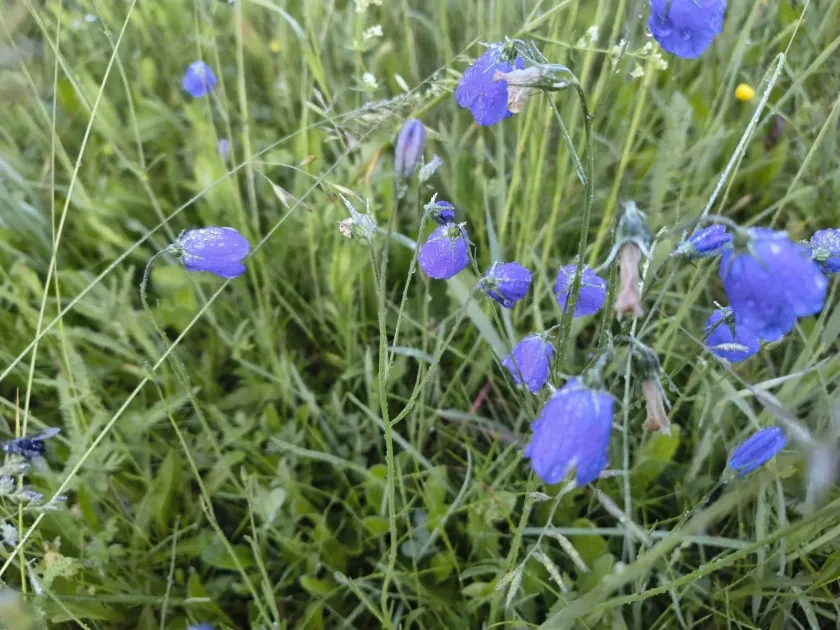
Botanically, the species is distinguished by its round, heart-shaped basal leaves—which often wither by the flowering stage—and its slender, lanceolate stem leaves. Thin yet wiry stems reach a height of 30-50 cm, supporting delicate, nodding bell-shaped flowers in shades of blue or violet.
General maintenance includes periodic weeding, especially in the early stages, and the application of balanced mineral fertilizers during the budding phase to encourage prolific and vibrant flowering.
Main diseases and pests
The primary threats to this crop include fungal infections such as powdery mildew and rust, which typically manifest under conditions of high humidity and poor air circulation in dense plantings.
To combat fungal pathogens, preventative spraying with broad-spectrum fungicides is recommended. Additionally, prompt removal and destruction of infected plant debris are necessary to break the cycle of infection.
Slugs and snails pose a significant danger to the young, tender foliage during wet weather. Control strategies include the use of physical barriers, traps, or environmentally safe granular baits based on iron phosphate.
Nematodes can also infest the root system, causing stunted growth and chlorosis. Proper crop rotation and avoiding planting in the same location for consecutive years are essential preventative cultural practices.
Winter care is vital; excessive moisture or standing water during the thawing season can lead to crown rot. Therefore, ensuring high-quality drainage is the most important factor in keeping the plant healthy through the winter months.
Harvesting
The primary utility of the Harebell is in ornamental horticulture and landscape design, where it is frequently featured in rock gardens, meadow-style plantings, and perennial borders for a naturalistic effect.
Seed collection for future propagation is carried out in late summer, once the seed pods turn brown. Timing is critical to ensure seeds are harvested before the pods split and release the seeds naturally into the environment.
For floristry purposes, stems are typically cut when the flowers are in the semi-bud stage. Harebell stems serve as excellent cut flowers, provided that floral preservatives or disinfectants are added to the vase water to prevent bacterial decay.
In traditional herbalism and pharmacology, the plant is valued for its content of saponins and flavonoids. Harvesting of the aerial parts is performed during peak flowering, with drying conducted in shaded, well-ventilated areas to preserve quality.
At the conclusion of the growing season, in late autumn, the aerial parts of the plant should be pruned back to 5-10 cm above the ground. This prepares the plant for dormancy and protects the crown during the coldest months.