
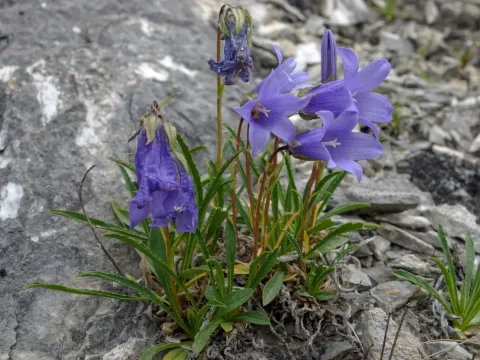
Chamisso's bellflower
Campanula dasyantha
Chamisso's bellflower (Campanula dasyantha) is typically propagated by seeds, which require a period of cold stratification to germinate effectively.
What the section contains
Chamisso's bellflower
Sowing should take place in late autumn for outdoor wintering, allowing the seeds to experience the natural temperature fluctuations of the season.
If sowing in the spring, seeds must be kept in a cold environment for several weeks before being moved to the seedbed or greenhouse trays.
The seeds are light-dependent for germination, so they should be sown on the surface of a fine, well-draining seed-starting mixture.
Once seedlings have developed two sets of true leaves, they can be transplanted carefully into their permanent location or larger pots.
Chamisso's bellflower is a member of the Campanulaceae family, native to the harsh Alpine habitats of Eastern Asia, Japan, and North America.
It demands excellent drainage and rocky or gritty soil, as it is highly susceptible to root rot if grown in heavy or waterlogged soil types.
The plant thrives in full sun, which is essential for maintaining a compact growth habit and promoting high-quality floral development.
It is perfectly suited for rock gardens, scree beds, or containers where the environment mimics its natural high-altitude mountain home.
Moderate fertilizing with low-nitrogen formulas is recommended during the growing season to ensure robust health without promoting weak growth.
The primary threats to the health of Chamisso's bellflower are fungal diseases, specifically those caused by pathogens that thrive in stagnant moisture.
Root rot is the most common issue, usually resulting from poor soil drainage or excessive watering, especially during the dormant winter months.
Slugs and snails present a significant threat, as they frequently feed on the succulent, low-growing foliage, which can quickly ruin the display.
Aphids may occasionally infest the stems, but they are generally manageable with simple horticultural soap or manual removal if caught early.
Preventative measures include regular weeding, maintaining proper spacing for air circulation, and avoiding overhead watering during humid days.