
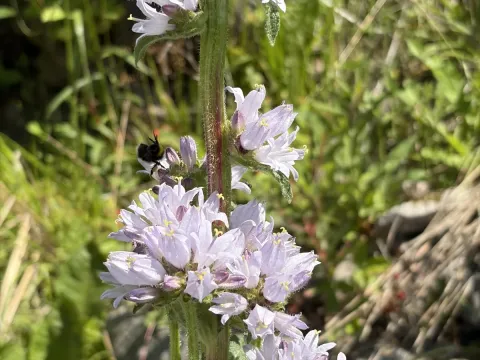
Cervicary bellflower
Campanula cervicaria
The Cervicary bellflower is a biennial plant belonging to the Campanulaceae family. Propagation is primarily achieved through seed sowing in late spring or late autumn.
What the section contains
Cervicary bellflower
Seeds are exceptionally small and require light for germination; therefore, they should be surface-sown and only lightly pressed into the moist soil substrate.
The optimal germination period is 14 to 21 days, depending on the temperature and soil moisture levels, which should be kept stable but not waterlogged.
During the initial growth phase, the plant focuses on establishing a strong root system and a basal rosette of leaves before transitioning into the reproductive stage.
Thinning out young seedlings is essential to prevent overcrowding, ensuring that each plant has enough space for proper development and nutrient access.
This species thrives in well-drained, fertile soil. It performs best in environments that mimic its natural habitat, such as open woodlands or grassy slopes.
Soil pH should ideally be neutral or slightly alkaline. In acidic environments, it is recommended to amend the soil with agricultural lime to optimize growing conditions.
The plant demonstrates a strong preference for sunny locations, although it can tolerate partial shade, especially during the peak of the midday heat.
Adequate air circulation is a critical requirement for maintaining plant health and preventing the onset of various moisture-related diseases during summer.
Watering should be managed carefully to ensure moisture reaches the root zone without creating stagnant pools of water that could lead to root decay.
Slugs and snails are the most common pests, as they target the succulent leaves of the basal rosette, particularly in humid garden environments.
Fungal issues, including powdery mildew and Botrytis, may affect the plant during prolonged periods of high humidity or insufficient air circulation.
To minimize pest risks, it is recommended to clear debris around the base of the plant and maintain a clean environment, free of weed competition.
If fungal infections are detected, appropriate organic treatments should be applied, focusing on areas with poor drainage to resolve the underlying issue.
Root rot remains a major threat in heavy, clay-rich soils, which emphasizes the importance of selecting well-aerated substrates prior to initial sowing.