
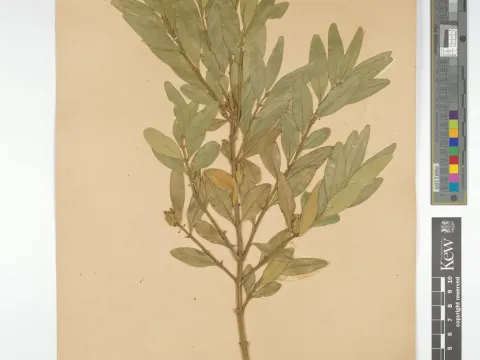
Wallich boxwood
Buxus wallichiana
Wallich boxwood (Buxus wallichiana) is an evergreen shrub belonging to the Buxaceae family. It is native to the Himalayan region, specifically found in high-altitude forests across Afghanistan, Pakistan, and India, exhibiting high adaptability to mountain climates.
What the section contains
Wallich boxwood
The plant thrives best in partial shade, mimicking the forest understory conditions of its natural habitat. While it can tolerate sunlight, protection from harsh, direct midday sun is necessary to prevent leaf scorch, especially in warmer climate zones.
Soil requirements are quite specific: Buxus wallichiana prefers well-draining, fertile soils with a neutral or slightly alkaline pH. It is crucial to avoid waterlogged conditions, as the root system is highly susceptible to decay in stagnant water environments.
Regarding climate, this species shows good hardiness but requires a steady supply of moisture throughout the growing season. In areas with cold winters, mulching the base of the shrub is recommended to protect roots from deep freezing and sudden temperature drops.
Cultivation practices involve regular pruning to maintain the desired shape and density. Fertilizer applications should be focused on the spring months to encourage healthy foliage development, avoiding excessive nitrogen late in the season to prevent weak new growth before winter.
The box tree moth (Cydalima perspectalis) is the most significant pest threatening this species. Larvae feed aggressively on leaves and bark, necessitating immediate intervention with biological or systemic chemical insecticides to save the plant.
Fungal pathogens such as Volutella blight are common, often appearing as necrotic spots on foliage or causing branch dieback. Effective management requires pruning out infected branches and applying broad-spectrum fungicides during humid weather conditions.
Spider mites can occur during prolonged periods of hot and dry weather, leading to discolored and stippled leaves. High humidity levels around the shrub and regular rinsing of the foliage can act as a natural deterrent against these tiny pests.
Root rot caused by Phytophthora species is a major threat in poorly drained soils. Maintaining proper spacing between shrubs is essential to promote good air circulation, which significantly reduces the humidity levels that favor fungal growth.
It is important to sanitize pruning shears between cuts when dealing with infected plants to prevent the spread of diseases. A systematic approach to plant hygiene and early detection of symptoms remains the best strategy for healthy boxwood production.