
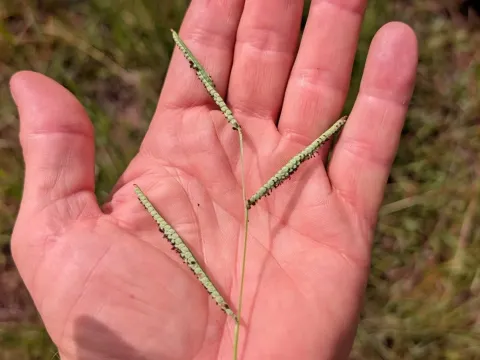
Bosc's paspalum
Paspalum boscianum
Bosc's paspalum is a warm-season annual grass, and successful establishment requires soil temperatures to reach at least 18-20°C before seeding.
What the section contains
Bosc's paspalum
Planting is ideally scheduled for late spring when the risk of frost has completely passed and the soil provides enough warmth for rapid germination.
The seeds are small and should be sown at a shallow depth of approximately 1-2 cm, ensuring they remain in moist contact with the soil surface.
Adequate moisture is critical during the initial germination phase; irrigation should be applied consistently until the plants are well-established.
Depending on the intended use, sowing rates usually range between 10 to 15 kilograms per hectare to ensure optimal stand density for forage production.
As a member of the Poaceae family, this species thrives in humid subtropical and tropical environments, naturally occurring in moist habitats.
The crop requires full sun exposure to maximize photosynthetic efficiency and needs open areas free from shading by taller vegetation.
Soil preferences include fertile loams that can retain moisture, though the plant shows high tolerance for temporary flooding and saturated soil conditions.
Temperature is a limiting factor for growth, as the plant is sensitive to cold snaps, requiring a long, warm growing season for full development.
Management involves strategic nitrogen fertilization during the tillering stage, which significantly promotes vegetative mass and nutrient density.
The yield of Bosc's paspalum is highly contingent on irrigation management and the general fertility levels of the soil throughout the season.
With intensive management and appropriate fertilizer application, biomass yields can reach 20-30 tons per hectare under favorable moisture conditions.
High yields are maintained by ensuring proper spacing, which reduces inter-plant competition and allows each plant to utilize nutrients effectively.
The species is known for its vigorous regrowth after cutting, allowing for multiple harvests within a single growing cycle in warmer climates.
Overall forage quality is considered moderate, making it a reliable and cost-effective option for supplemental summer feeding programs.
The crop is susceptible to various leaf spot diseases, which are typically exacerbated by high humidity and poor air circulation in the field.
Root rots can become a significant issue in poorly drained soils during cooler weather, leading to stand thinning and reduced overall productivity.
Aphids represent a primary pest threat, as they feed on succulent leaf tissues and can transmit various viral pathogens that stunt growth.
Soil-dwelling larvae, such as wireworms, can damage the root systems during the early establishment phase, significantly impacting plant survival.
Implementing a crop rotation strategy and selecting disease-resistant seeds are essential practices to minimize the impact of pests and pathogens.
Harvesting for green fodder is recommended at the early heading stage, providing the best balance of protein content and digestible fiber for livestock.
When preparing hay, harvesting should occur during dry weather to facilitate rapid curing and prevent mold development during storage.
Cutting equipment should be set to an appropriate height to avoid damaging the crown of the plant, ensuring healthy regrowth for subsequent cuts.
Seed harvesting is conducted when the spikes reach full maturity, indicated by a deep color change and hardened seeds within the panicles.
Post-harvest management involves clearing debris and applying light irrigation to stimulate the plant's recovery and prepare it for the next growth phase.