
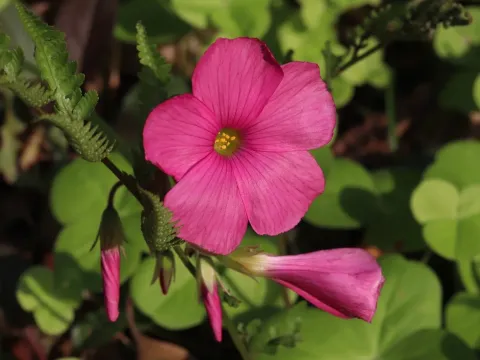
Bowie wood sorrel
Caudoxalis bowieana
Bowie wood sorrel (Caudoxalis bowieana) is a bulbous perennial member of the Oxalidaceae family, highly valued for its attractive pink blooms.
What the section contains
Bowie wood sorrel
The planting season typically begins in spring, once the risk of frost has passed and the soil has achieved a consistent warmth.
Bulbs should be placed at a depth of approximately 3 to 5 centimeters in well-drained soil, providing adequate space for root expansion.
When cultivating this species in containers, ensure that the pot size is appropriate to accommodate the bulb's development and drainage needs.
Proper spacing during planting is essential to ensure adequate airflow around the foliage, which reduces the risk of fungal infections.
This crop thrives in bright, sunny locations, as excessive shade will result in elongated stems and a significant reduction in flowering capacity.
The ideal soil is porous, rich in organic matter, and exhibits excellent drainage to prevent bulb rot during periods of high humidity.
Regular watering is required during the growing season; however, it is critical to allow the soil to dry out slightly between irrigation cycles.
The plant requires a period of dormancy, during which water must be withheld to allow the bulb to rest and recover for the next cycle.
Supplementary fertilization with balanced minerals during active growth can enhance the vigor and color intensity of the flowers.
Fungal pathogens such as root rot and grey mold are the most common threats to Bowie wood sorrel, usually appearing in poorly ventilated or waterlogged conditions.
Insect pests, particularly aphids and spider mites, can infest the leaves, causing wilting and decreasing the overall aesthetic quality.
Management involves vigilant monitoring and the timely application of environmentally friendly pest control methods if an infestation occurs.
Good agricultural practice, including clean planting sites and adequate plant spacing, is the primary defense against the spread of diseases.
In cases of severe infestation, targeted chemical treatments may be necessary, provided they are applied according to safety guidelines.
Harvesting of bulbs should be performed after the foliage has naturally withered, indicating the end of the vegetative cycle.
After lifting the bulbs from the soil, they should be cleaned and allowed to cure in a dry, shaded area with good airflow to prevent fungal growth.
Storing the bulbs requires cool temperatures and dry conditions to ensure they remain dormant until the following spring planting season.
Inspect stored bulbs periodically to identify any rot, removing affected specimens immediately to protect the health of the remaining stock.
Proper curing and storage are the foundations of successful propagation and reliable flowering in subsequent growing seasons.