
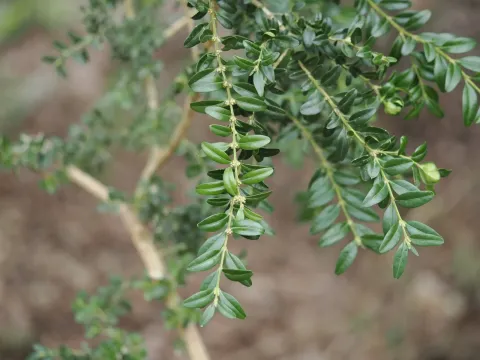
Notobuxus
Notobuxus
Notobuxus is a genus of evergreen shrubs belonging to the Buxaceae family. While historically classified as a separate entity, taxonomic revisions often place these species within the broader context of the Buxus genus due to their genetic proximity and shared biological traits.
What the section contains

Notobuxus
The plant originates from Southern Africa, where it thrives in the understory of forest environments. Its natural habitat is characterized by moderate temperatures and consistent levels of soil moisture, which should be replicated in cultivation for optimal growth.
Regarding climatic requirements, Notobuxus performs best in protected areas away from direct, scorching sunlight and strong, drying winds. It is sensitive to frost, making it suitable mainly for mild climates or indoor greenhouse cultivation in colder regions.
Soil quality is paramount for the health of these shrubs. They require well-draining, nutrient-rich substrates that mimic forest floor conditions. Avoid compacted soils that do not allow for root respiration, as this significantly stunts the plant's development.
In terms of horticulture, Notobuxus is valued for its dense foliage and adaptability to trimming. It serves as an excellent candidate for formal gardening, including hedge creation, privacy screens, and intricate topiary structures that maintain their shape year-round.
Pests represent the most significant threat to the integrity of Notobuxus, with the box tree moth being the primary concern. Larvae can defoliate entire specimens in a very short timeframe, necessitating the use of pheromone traps or systematic insecticides.
Pathogenic fungi are frequent invaders, particularly in conditions of high humidity and poor airflow. Symptoms such as necrotic leaf spots indicate the presence of diseases that thrive when moisture is trapped against the foliage of the shrub.
Root system health is vital to prevent wilting and sudden decline. If the drainage is insufficient, the environment becomes anaerobic, inviting root-rotting organisms. Proper irrigation management is essential to keep the root ball moist but never waterlogged.
Spider mites can be a persistent issue in indoor or sheltered environments where humidity levels are chronically low. These pests extract fluids from the leaves, causing stippling and eventual yellowing, which reduces the plant's overall aesthetic appeal.
Integrating a preventative care schedule that includes nutrient balancing and regular plant inspection is the most effective way to manage threats. Healthy, well-nourished specimens demonstrate a significantly higher resistance to secondary infections.