
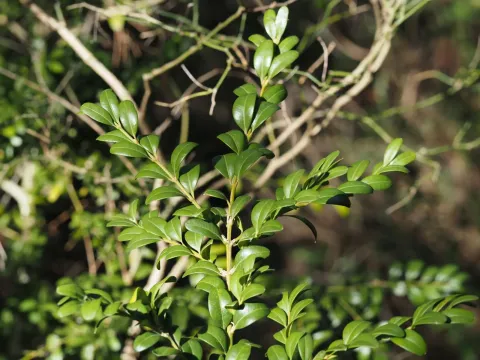
Common box
Buxus arborescens
Buxus sempervirens, known as common box, is a long-lived evergreen shrub or small tree in the Buxaceae family. It is widely recognized for its dense, glossy foliage and exceptional tolerance to regular trimming, making it a staple in ornamental horticulture.
What the section contains
Common box
The plant thrives in a variety of soils, provided they are well-drained and alkaline. While boxwood is highly shade-tolerant, it grows most vigorously in partial shade where it is protected from harsh midday sun and drying winter winds.
Successful cultivation requires mindful irrigation, especially during the first few years after planting. However, once established, the plant becomes reasonably drought-tolerant, although severe water deficiency can hinder growth.
Regular feeding with balanced organic or mineral fertilizers is recommended during the active growing season. Applying mulch around the root zone helps retain soil moisture and suppresses weed growth, which is beneficial for the root system.
Topiary and hedging are the primary uses for Buxus sempervirens. Due to its slow growth rate, the plant is ideal for precision pruning. Annual maintenance pruning is typically performed in late spring to encourage branching and maintain the desired shape.
The box tree moth (Cydalima perspectalis) is a significant pest that has caused widespread damage to boxwood populations. Management involves frequent inspections and the use of targeted biological or chemical insecticides.
Fungal diseases like box blight (Calonectria pseudonaviculata) represent another serious threat. Symptoms include leaf spots and stem cankers, which can lead to severe defoliation and plant death if left untreated.
Improving airflow within the foliage is critical to preventing fungal issues. Pruning techniques should prioritize thinning the inner branches to ensure better ventilation and reduced humidity pockets within the shrub.
Sanitation is vital when dealing with pathogens. All infected plant debris should be carefully collected and disposed of, and pruning tools must be sterilized with alcohol or bleach after each use to prevent cross-contamination.
Maintaining optimal plant health through balanced nutrition and appropriate site selection is the best defense against environmental stressors. A healthy, stress-free plant is naturally more resistant to both pest outbreaks and opportunistic diseases.