
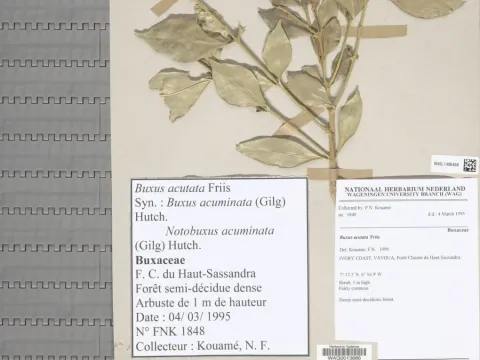
Sharp-leaf boxwood
Buxus acutata
Sharp-leaf boxwood (Buxus acutata) is an evergreen woody plant belonging to the Buxaceae family. Originating from subtropical regions, it thrives in environments that offer moderate humidity and protection from harsh weather elements.
What the section contains
Sharp-leaf boxwood
This crop requires well-drained soil with a neutral or slightly alkaline pH. It is sensitive to waterlogging, so ensuring excellent drainage is critical to prevent root rot and promote healthy development of the root system.
The plant is known for its shade tolerance, making it an excellent choice for areas with filtered light. While it can adapt to various conditions, consistent moisture in the root zone is necessary for maintaining its deep green foliage.
Climate requirements include protection from freezing temperatures, especially during the first few years of establishment. In colder zones, protective mulch is essential to maintain stable soil temperatures during the winter months.
Cultivation practices involve regular pruning and shaping. Because Buxus acutata grows at a moderate pace, it is highly valued for formal gardens, topiary projects, and structured landscape designs that require neat, compact edges.
The boxwood leaf miner and the box tree moth are significant pests that can devastate the foliage. Integrated pest management strategies, including monitoring and timely application of insecticides, are vital for crop health.
Fungal pathogens such as blight cause severe damage, especially in areas with high humidity and poor air circulation. Proper spacing between plants is a primary method for reducing the risk of fungal spread.
Spider mites are common during dry, hot spells and can cause discoloration of the leaves. Maintaining proper irrigation levels and increasing humidity around the canopy helps to discourage mite infestations.
Sanitation practices, such as removing infected leaves and branches, must be performed throughout the season. This helps minimize the overwintering potential of pests and diseases within the garden environment.
Healthy plants are more resilient, so balanced fertilization and proper irrigation are essential components of preventive care. Monitoring the plants for early symptoms of stress is the best way to ensure their longevity.