
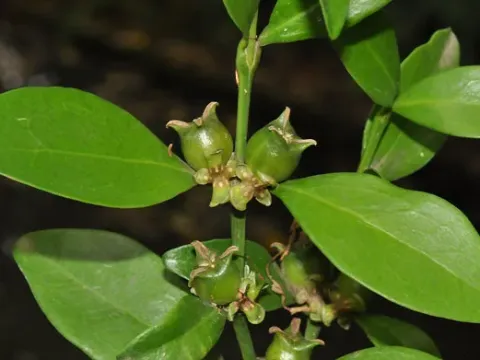
Natal box
Buxus natalensis
Natal box (Buxus natalensis) is an evergreen shrub belonging to the Buxaceae family. It is native to the KwaZulu-Natal region of South Africa. This plant is well-regarded for its slow growth habit, making it an excellent choice for ornamental landscaping in subtropical climates.
What the section contains
Natal box
Botanically, it is characterized by dark green, glossy, leathery leaves arranged oppositely along the branches. The plant forms a dense, compact canopy, and its stems start as square-shaped green shoots before maturing into woody, grey-barked branches over several years.
In terms of climate requirements, Buxus natalensis thrives in environments that avoid extreme frost. It prefers partial shade to filtered sunlight, as excessive heat can scorch the foliage. Consistent humidity is beneficial, though the plant is moderately resilient once established.
The soil must be well-drained and slightly alkaline or neutral. Waterlogged conditions are detrimental to the roots, so light, organic-rich soil mixes with sand or gravel for drainage are recommended. Regular mulching helps maintain soil moisture levels and protects the root zone from temperature fluctuations.
Economically and aesthetically, the Natal box is primarily used for formal garden designs, low hedging, and topiary. Its ability to tolerate frequent pruning allows gardeners to maintain specific shapes and sizes, enhancing the structure and greenery of private and public gardens.
The Natal box is susceptible to several fungal diseases, most notably Volutella blight, which causes leaves to turn brown and branches to die back. Poor air circulation within the shrub's center is a primary factor contributing to the spread of these fungal infections.
Pest issues include boxwood spider mites and various scale insects that sap the vitality of the plant. These pests can cause chlorosis, where leaves turn yellow and drop prematurely, significantly reducing the decorative appeal of the plant during the growing season.
Integrated pest management is the most effective approach. Pruning branches to allow better airflow and sunlight penetration significantly reduces the risk of fungal outbreaks. Removing debris from around the base of the plant is also essential for maintaining hygiene.
Chemical intervention should be used only as a secondary measure. Fungicides and systemic insecticides are effective if applied during the early stages of infestation. Always ensure that the treatment covers both the upper and lower surfaces of the leaves to ensure full protection.
Monitoring the plant for signs of stress, such as wilted foliage or abnormal leaf spots, is crucial for proactive care. Healthy plants are generally more resistant to pests, emphasizing the importance of proper watering and nutrient management throughout the year.