
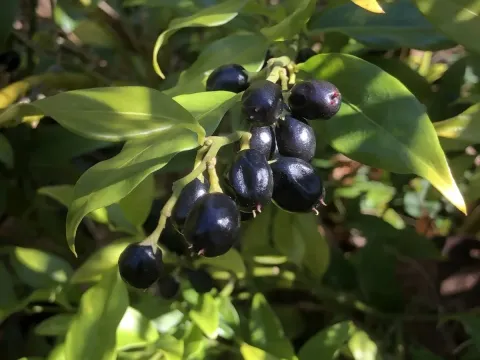
Sarcococca
Sarcococca Lindl.
Sarcococca (genus Sarcococca Lindl.) is a group of evergreen shrubs belonging to the Buxaceae family. Naturally occurring in Southeast Asia, these plants are highly valued in horticulture for their ability to thrive in shaded environments where other species fail.
What the section contains


Sarcococca
The plant features glossy, leathery dark green leaves and small, white, highly fragrant flowers that bloom during winter or early spring. This unique timing makes Sarcococca a prized addition for winter gardens, providing both color and scent during the off-season.
Sarcococca requires rich, fertile, and well-drained soil. It is essential to ensure that the site has excellent drainage, as the plant is susceptible to root rot if left in waterlogged conditions for extended periods.
Regarding climate, Sarcococca prefers cool, sheltered spots protected from harsh, drying winds and direct midday sun. While some species are hardy, they generally thrive best in mild temperate climates; in colder regions, they are often grown in pots to be brought indoors during winter.
Cultivation practices include regular watering during the first few years to establish a deep root system. Adding a layer of organic mulch around the base of the plant helps retain soil moisture, suppress weeds, and provide slow-release nutrients throughout the growing season.
The main threats to Sarcococca are related to fungal diseases, particularly root rot, which is caused by poor drainage. To prevent this, ensure the planting medium is loose and porous, and avoid over-fertilization with nitrogen-heavy products.
Scale insects and mealybugs are the most common pests that affect Sarcococca. They usually hide on the underside of leaves and along the stems, sucking plant juices and leaving behind sticky honeydew that can promote the growth of sooty mold.
Spider mites can also be a problem, especially in dry conditions. Keeping the plant hydrated and providing occasional misting, or using horticultural oils, can effectively manage these pests before they reach damaging levels.
Leaf spot diseases may occasionally occur if there is poor air circulation. Pruning the shrub lightly to improve airflow through the branches is an effective cultural practice to minimize the risk of pathogen spread.
Maintaining proper plant nutrition is key to natural resistance. Using a balanced, slow-release fertilizer in early spring helps the shrub grow vigorously and withstand minor attacks from common garden pests.