
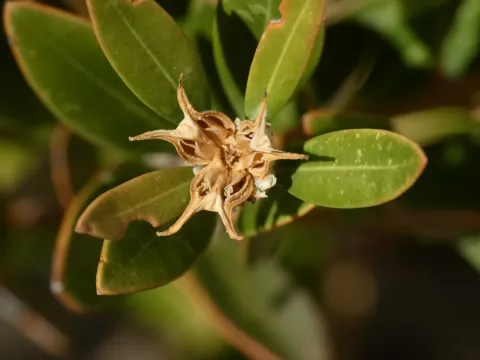
Balearic boxwood
Buxus balearica
Balearic boxwood (Buxus balearica) is a distinct species within the Buxaceae family, renowned for its larger, more vibrant leaves compared to the common boxwood. This evergreen shrub or small tree can grow quite large, making it a focal point in landscape architecture.
What the section contains
Balearic boxwood
Originating from the Balearic Islands, parts of Spain, and Sardinia, this plant thrives in Mediterranean-type climates. It requires regions where the winter temperatures remain mild, as it lacks the high cold-hardiness of other Buxus species.
Botanically, the species is characterized by its glossy, leather-like leaves that grow up to 4 cm in length. The growth habit is relatively slow but steady, and the plant forms a dense, evergreen canopy that is highly prized for formal gardening and hedges.
The soil requirements are specific: it demands a well-draining medium that is rich in organic matter. While it can adapt to various soil types, it performs best in neutral to slightly alkaline conditions, avoiding acidic soils that can inhibit nutrient uptake.
Climate management is crucial for the health of Buxus balearica. It prefers partial shade, especially in hotter regions, to prevent leaf scorch. Providing a sheltered location that protects the foliage from desiccating winter winds will significantly improve long-term survival.
The box tree moth (Cydalima perspectalis) is currently the most devastating threat to Balearic boxwood populations, as its larvae feed voraciously on the foliage and can lead to complete defoliation if left untreated.
Fungal pathogens such as box blight (Calonectria pseudonaviculata) pose a significant risk, causing leaf drop and stem lesions. This disease is highly contagious and often requires the removal of affected parts to save the rest of the plant.
Root rot, frequently caused by Phytophthora species, is a common issue in poorly drained soils. The first symptoms often include wilting and discolouration, which often indicate that the root system has already been severely compromised.
Spider mites represent another common pest that flourishes in hot, dry conditions. They suck sap from the leaves, causing a stippled appearance and eventual leaf loss, which necessitates regular inspection and potential acaricide application.
Effective management includes maintaining optimal plant vigor through balanced fertilization and rigorous pruning practices. Ensuring that the foliage stays dry and the root zone is well-aerated is essential to minimize the environmental pressure for fungal outbreaks.