
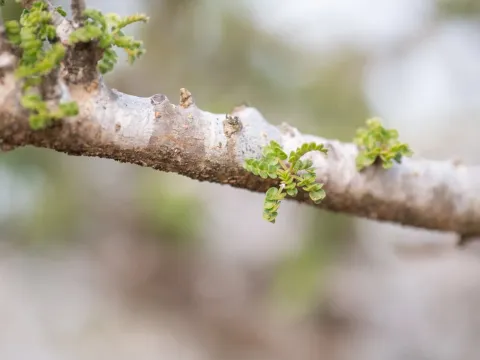
Commiphora planifrons
Commiphora planifrons
Commiphora planifrons belongs to the Burseraceae family. This shrub-like species is native to arid regions where it has evolved distinct physiological mechanisms to survive in water-scarce environments.
What the section contains
Commiphora planifrons
The cultivation of this plant requires well-drained, sandy or stony soils. Drainage is the most critical factor, as stagnant water is lethal to the root system and promotes rapid decay and fungal proliferation.
Climate requirements include high temperatures and intense sunlight. The species thrives in tropical desert zones where it can maximize photosynthesis during long periods of clear, sunny weather.
Agronomic management relies on minimal irrigation and strict moisture control. The plant exhibits a xerophytic growth pattern, allowing it to store vital moisture within its succulent-like bark and wood tissues.
Economically, the plant is primarily utilized for its aromatic resin. Harvesting is performed through specialized incisions in the bark, allowing the exudate to emerge and solidify naturally under the sun.
The primary threats to Commiphora planifrons are root and collar rots caused by excessive moisture. When the soil remains damp for extended periods, the risk of pathogen colonization becomes extremely high.
Pests such as wood-boring beetles present a significant challenge. These insects create galleries within the woody tissues, which not only stresses the plant but also creates entry points for secondary bacterial infections.
Spider mites can become a nuisance in dry, indoor, or greenhouse conditions. They thrive in environments with low humidity, drawing nutrients from the foliage and weakening the plant's overall photosynthetic capacity.
Effective management involves maintaining healthy tree spacing and ensuring adequate airflow. Proper sanitation of tools used for resin harvesting is crucial to prevent the spread of diseases between individual trees.
Resistance to pests is inherently high due to the plant's resinous sap, which contains anti-microbial and insect-repellent compounds. However, weakened plants often succumb to infestations if not properly monitored.