
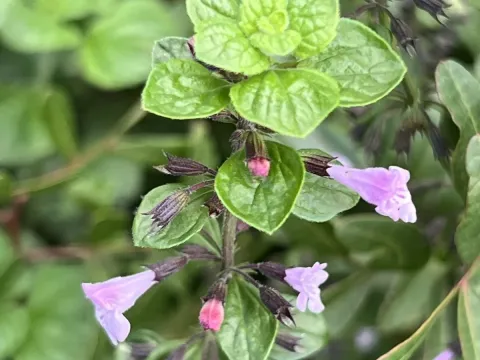
Calamintha nepeta
Calamintha nepeta
Calamintha nepeta, commonly known as lesser calamint, is a perennial herb belonging to the Lamiaceae family. It is highly valued for its intense minty aroma and its ability to attract pollinators, making it an excellent addition to both agricultural and ornamental settings.
What the section contains
Calamintha nepeta
Propagation is typically done through seeds or division of mature plants. For seed propagation, sowing should take place in early spring, indoors or in a greenhouse, using a well-draining seed-starting mix to ensure high germination rates.
Seeds are very small and should only be lightly covered with a thin layer of soil or vermiculite. Maintaining consistent moisture is crucial during the germination phase, which usually takes two to three weeks under warm conditions.
Division is another effective method, carried out in early spring or autumn. By splitting established clumps, you can ensure the genetic integrity of the plant and obtain vigorous specimens that are ready for immediate transplanting.
When transplanting into the field, ensure a spacing of 30 to 40 centimeters between plants. This distance allows for optimal airflow, which is essential for reducing the humidity around the foliage and preventing fungal outbreaks.
Lesser calamint thrives in full sun exposure. While it can tolerate partial shade, maximum sunlight is required for the plant to produce high concentrations of essential oils, which define its culinary and therapeutic value.
Soil requirements are relatively modest, provided the drainage is excellent. It prefers neutral to slightly alkaline, gritty, or sandy loam soils. Heavy clay soils must be amended with grit or sand to prevent waterlogging, which the plant cannot tolerate.
Regular maintenance involves keeping the area free of competing weeds. During the early stages of growth, the plant may struggle to compete with aggressive grasses, so manual weeding is highly recommended for the first season.
Watering should be managed carefully. While established plants are notably drought-tolerant, a consistent supply of water during the first weeks of transplanting and during extreme summer heatwaves promotes vigorous growth and leaf production.
Fertilization is rarely necessary if the soil quality is decent. Over-fertilization, especially with high-nitrogen formulas, can lead to excessive green growth at the expense of aroma, so light organic amendments are preferred if needed.
The yield of Calamintha nepeta is focused on the production of aromatic leaves and flowering tops. Productive capacity is highest when the plant is harvested during its peak physiological state, which occurs as flowering begins.
In a controlled environment, plants can provide multiple harvests throughout the season. Harvesting should be timed to allow sufficient time for the plant to recover and prepare for the next growth cycle before winter.
Yield stability is excellent over a period of three to four years. After this time, the plant may become woody and less productive, requiring the plantation to be renewed to maintain commercial output standards.
To maximize the harvest, ensure the plants are not stressed by pests or nutrient deficiencies. Healthy plants respond well to pruning, which stimulates the growth of new, aromatic stems rather than woody older growth.
After harvesting, immediate processing is required. Whether intended for fresh market use or drying for essential oil extraction, maintaining the integrity of the essential oil glands is the primary goal of every successful harvest.
The main threats to Calamintha nepeta are moisture-related diseases. Phytophthora and other root rot pathogens thrive in soggy soils, often causing sudden wilting and death of the plant in poorly drained field sections.
Powdery mildew is a common foliage issue, especially in late summer when humidity levels rise and air circulation is poor. Proper spacing and thinning out of older stems can significantly mitigate the risk of infection.
Pests such as aphids and spider mites can infest the foliage, particularly in dry conditions. Aphids suck the sap, leading to stunted growth, while spider mites cause visible yellowing and speckling on the leaves.
Slugs and snails can also be problematic in the spring, grazing on young, succulent shoots. Using organic barriers or traps around the perimeter of the planting area is an effective way to manage these mollusks without chemicals.
Preventative measures, including regular site inspections and the removal of infected plant material, remain the most effective strategy for managing the health of a calamint crop in a sustainable farming system.
Harvesting should be performed in the morning after the dew has evaporated, ensuring that the essential oils are at their highest concentration. Using sharp, clean shears ensures minimal damage to the remaining plant tissues.
Cut the stems about 10 to 15 centimeters above the base. This provides enough foliage for the plant to continue photosynthesizing and regenerating, which is vital for sustained production across the season.
For drying purposes, hang the harvested stems in bunches or lay them out on racks in a cool, dark, and well-ventilated space. Avoid direct sunlight, as it degrades the aromatic compounds and discolors the leaves.
Once dried to the desired moisture content, the leaves should be stripped from the stems and stored in airtight containers. This protects the product from oxidation and moisture, preserving the signature scent for months.
Final product quality is verified by the intensity of the aroma when the dried leaves are crushed. High-quality calamint should maintain a vibrant green color and a strong, crisp fragrance indicative of proper harvesting and handling.