
Commiphora rostrata
Commiphora rostrata
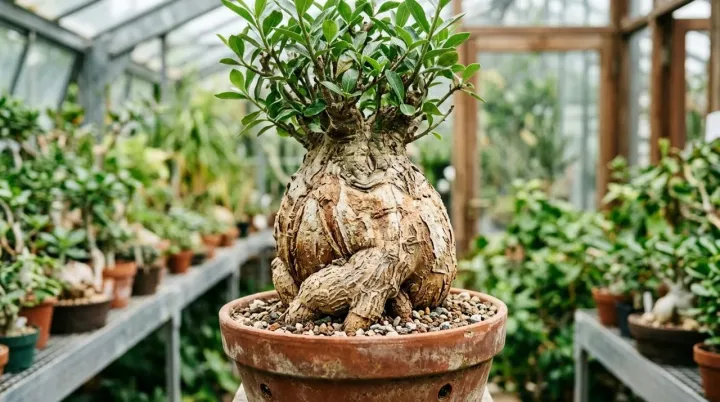
Description
Sowing dates
Propagation of this crop for agricultural and decorative purposes is primarily carried out via seeds in a controlled environment. Sowing is typically performed during the spring season when substrate temperatures reach at least 25–28°C.
Successful germination requires high humidity and excellent ventilation to prevent the development of mold. Seeds should be sown in a light, sandy medium, buried only slightly to ensure adequate oxygen access.
Seedlings often emerge unevenly, making it critical to maintain a stable microclimate for 2 to 4 weeks. The use of bottom heat significantly accelerates the germination process by warming the seeds.
Cuttings are an alternative propagation method; however, rooting is notoriously difficult due to the specific plant physiology. Cuttings require treatment with rooting hormones and strict humidity control to survive.
Young plants require careful repotting as the caudex grows to avoid damaging the sensitive root system. Utilizing wide pots allows the plant to develop its unique, characteristic form without restriction.
Growing requirements
Commiphora rostrata belongs to the Burseraceae family and is native to the arid regions of Northeast Africa, particularly Somalia. It is a xerophytic plant adapted to extremely high temperatures and prolonged dry periods.
Healthy development requires well-draining, nutrient-poor soil that mimics stony desert substrates. An ideal mix consists of loam, coarse-grained sand, and gravel fragments to ensure rapid drainage.
The plant is extremely photophilic and must be placed in the brightest available location or kept under full-spectrum grow lights. Inadequate light results in etiolation and the loss of the attractive caudex structure.
The temperature should remain warm throughout the year: summer optimal ranges are 25°C to 35°C, while winter temperatures should not fall below 15°C. Avoiding sudden temperature shifts and cold drafts is vital for plant health.
Watering must be strictly moderate, allowing the soil to dry out completely between sessions. During the winter dormancy period, watering should be minimized to only what is necessary to prevent severe caudex shriveling.
Main diseases and pests
The primary threat to the crop is stagnant moisture in the root zone, which rapidly leads to bacterial rot. Effective prevention involves the use of high-quality drainage and porous, well-aerated soil.
Improper maintenance conditions make the plant vulnerable to pests such as spider mites and scale insects. Controlling these requires the use of systemic insecticides or acaricides at appropriate concentrations.
Mealybugs can attack young shoots and growth points, sucking sap and suppressing development. Regular inspection and wiping stems with an alcohol solution help monitor and control pest populations.
Fungal infections, which appear as spots on the bark, occur when the environment is cold and humid. Affected areas must be isolated and treated with broad-spectrum fungicides to prevent spread.
Viral diseases are extremely rare, but if detected, immediate disposal of the infected plant is recommended. Adhering to strict hygiene for pruning tools is an essential practice to prevent pathogen transmission.