
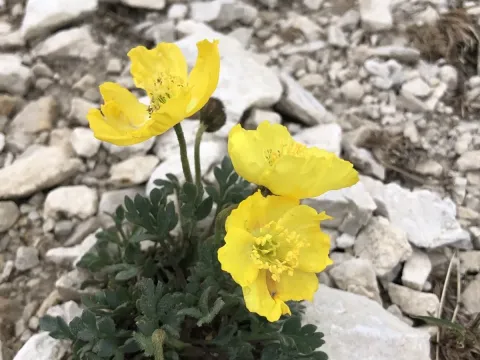
Burser's Poppy
Papaver burseri
Burser's Poppy (Papaver burseri) is a perennial herbaceous plant belonging to the Papaveraceae family. It is naturally found in high-altitude alpine regions, specifically within the mountain ranges where it thrives on rocky slopes and limestone debris.
What the section contains
Burser's Poppy
The botanical structure of the plant features a basal rosette of finely divided, pubescent leaves and solitary flowers on naked stalks. The root system is deep and taproot-like, an adaptation that allows the plant to anchor itself firmly into unstable gravel and rock substrates common in its native habitat.
To cultivate this species successfully, gardeners must provide a growing medium that is highly permeable, alkaline, and rich in limestone particles. Poor drainage is the most significant limiting factor, as stagnant moisture quickly leads to root rot and the death of the plant.
The plant requires full sun exposure to mimic the intense light of alpine environments. It performs best in cooler climates, as extreme heat combined with high humidity can stress the plant and reduce its aesthetic quality and vigor.
Economically, Burser's Poppy serves almost exclusively as an ornamental specimen in alpine garden design and botanical collections. Due to its slow growth rate and specific soil requirements, it is not cultivated as an agricultural crop but rather maintained for its unique visual appeal and rarity.
The most serious threats to Burser's Poppy are fungal infections caused by excessive soil moisture and poor air circulation. Root rot and damping-off are the primary concerns for young seedlings and established plants alike.
Pest pressure mainly comes from aphids, which target the tender buds and young foliage. In addition, subterranean pests such as wireworms can destroy the taproot, which is fatal to the plant given its inability to regenerate damaged root systems effectively.
Management of these threats involves meticulous watering practices and the use of well-draining substrates. If fungicides are necessary, they should be applied early in the season to prevent the spread of powdery mildew or other foliar pathogens.
Insects can be managed through integrated pest management strategies, focusing on removing infected parts and applying insecticidal soaps if the infestation is severe. Chemical treatments should be used sparingly to avoid harming the delicate balance of the plant's alpine environment.
Prevention is key, including avoiding overcrowding and ensuring good space between specimens to allow for adequate airflow. Maintaining a sterile soil environment during propagation is also recommended to reduce the incidence of soil-borne diseases.