
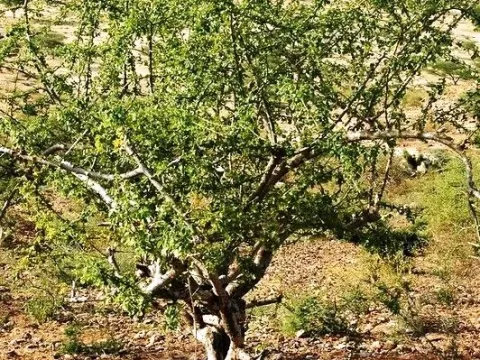
Commiphora pedunculata
Commiphora pedunculata
Commiphora pedunculata is a woody plant species belonging to the Burseraceae family. It is native to arid and semi-arid regions of Africa, where it thrives in challenging climatic conditions typical of savannas.
What the section contains
Commiphora pedunculata
The plant is highly adapted to extreme heat and drought, functioning as a xerophyte. It requires well-drained, porous soil to prevent root rot, which is the most critical factor for its successful cultivation.
The ideal environment for this crop includes tropical temperatures with a clear distinction between wet and dry seasons. It cannot survive in freezing temperatures and prefers high sun exposure for optimal resin synthesis.
Botanically, it is known for its aromatic bark, which produces specialized resinous substances. The trees usually possess thorns and a succulent-like capability to store water in their stems during periods of low rainfall.
Commercially, Commiphora pedunculata is valued for its resin, which has historical and contemporary uses in perfumery, incense production, and traditional medicinal applications in various cultures.
Root rot caused by pathogenic fungi is a primary threat, especially when irrigation management fails to provide adequate drainage or during excessively wet seasons that saturate the soil.
Various sap-sucking insects, such as mealybugs and scale insects, frequently target the foliage and younger branches, which can significantly decrease the tree's vigor and resin yield.
Wood-boring beetles represent a significant danger, as they penetrate the bark and internal woody tissue, disrupting nutrient transport and creating vulnerabilities for secondary infections.
Mechanical damage to the trunk during harvesting processes may lead to localized necrosis if the incisions are too deep or if the wound is not allowed to callus over naturally.
Effective management strategies include integrated pest management (IPM) practices, careful monitoring of plant health, and ensuring appropriate spacing to promote air circulation within the plantation.