
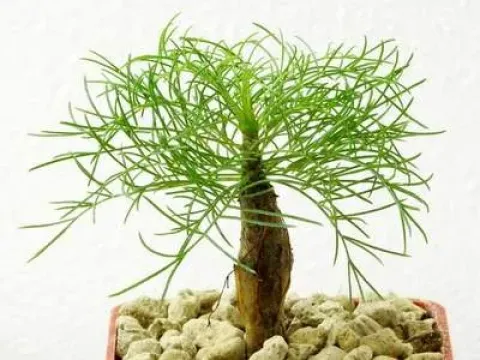
Commiphora kraeuseliana
Commiphora kraeuseliana
Commiphora kraeuseliana is a remarkable species belonging to the Burseraceae family. Native to the arid regions of Namibia, this plant is specifically adapted to extreme desert conditions, characterized by high heat and very low annual rainfall.
What the section contains
Commiphora kraeuseliana
Botanically, it is recognized as a succulent shrub that develops a thickened, knobby structure. Its most distinct feature is its exfoliating, papery bark, which acts as a protective layer against intense solar radiation, preventing the inner tissues from overheating.
Cultivation of this species requires strict adherence to natural light cycles. It demands full sun exposure throughout the year to maintain its compact growth form and to promote the development of its unique woody structure, which is prized by succulent collectors.
The soil requirements are specific: the medium must be highly porous and inorganic. A mixture of gravel, coarse sand, and a minimal amount of rocky loam is ideal to ensure that water drains instantly, preventing any risk of moisture accumulation near the roots.
Temperature management is critical. During the active growing season, high temperatures are necessary for healthy development. Conversely, during the winter dormant phase, the plant requires a cool, dry environment to rest, which is essential for its longevity and health.
The primary threat to Commiphora kraeuseliana is root rot caused by improper watering practices. Excess water in the substrate creates an anaerobic environment that fosters the growth of pathogenic fungi, which can destroy the root system in a matter of days.
Mealybugs are the most common pests found on this plant. They tend to hide in the crevices of the textured bark, making manual removal difficult. Using systemic insecticides is often the most effective way to control infestations without damaging the plant's delicate surface.
Spider mites can also be a significant issue in hot, dry climates or greenhouses with poor air circulation. They feed on the succulent tissues, causing the plant to lose its vibrant appearance and weakening its overall structure over time.
Scale insects present a similar challenge, as their hard shells provide natural protection against many conventional pesticides. Regular monitoring of the stems and branches is necessary to catch and treat these infestations before they become widespread.
Poor aeration can lead to fungal infections on the stems, particularly if the plant is kept in humid conditions. Maintaining good ventilation is a vital prophylactic measure to ensure the plant remains robust and resistant to opportunistic diseases.