
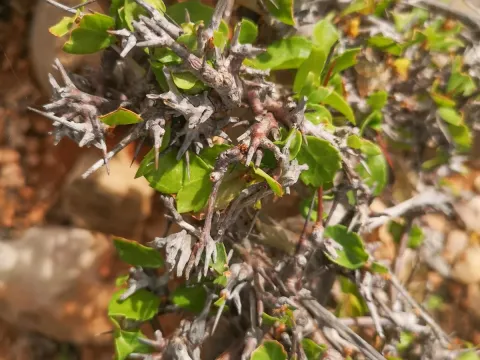
Commiphora incisa
Commiphora incisa
Commiphora incisa belongs to the Burseraceae family, primarily native to the arid landscapes of Eastern Africa. This shrubby plant is highly specialized for survival in semi-desert environments, showcasing extreme resilience to water scarcity and intense heat exposure.
What the section contains
Commiphora incisa
From a botanical perspective, the plant is a thorny shrub featuring distinctive papery bark that peels away. The leaves are characteristically incised or serrated, which is reflected in its scientific name. It possesses a complex internal network of resin ducts, which serve as a protective mechanism against herbivores and pathogens.
Climatic requirements are strictly limited to hot and dry environments. It requires constant exposure to direct sunlight and thrives in areas where daytime temperatures remain high throughout the year. Frost is entirely incompatible with this species, meaning cultivation must occur within frost-free tropical or subtropical zones.
Regarding soil conditions, excellent drainage is the most critical requirement for successful cultivation. The plant thrives in sandy, rocky, or limestone-rich soils that prevent any water accumulation near the root system. Any level of waterlogging will quickly lead to root rot and eventual plant failure.
The primary economic output of this culture is its aromatic resin, which is harvested for use in the perfume and pharmaceutical industries. Furthermore, the species plays a role in traditional medicine and local craftsmanship, where its wood is valued for its durability and resistance to termite attacks in arid climate conditions.
The main threats to Commiphora incisa include fungal pathogens such as Fusarium, which thrive if soil moisture levels become excessive. Insect pests, particularly wood-boring beetles, can also severely damage plantations. Integrated pest management should focus on maintaining adequate spacing and strictly monitoring soil moisture levels.