
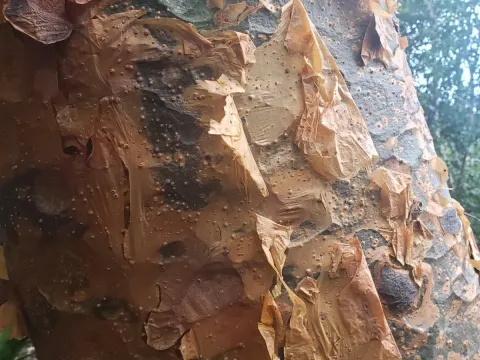
Commiphora harveyi
Commiphora harveyi
Commiphora harveyi, also known as the copper-stemmed corkwood, is a deciduous tree or shrub belonging to the Burseraceae family. It is renowned for its attractive, peeling bark that often turns a coppery or reddish color, adding aesthetic value to the landscapes where it grows.
What the section contains
Commiphora harveyi
Native to Southern and Eastern Africa, this species thrives in dry woodland areas and rocky slopes. Its natural distribution spans countries like South Africa and Zimbabwe, where it is adapted to high temperatures and seasonal rainfall patterns.
Cultivation success depends on providing well-drained, porous soils. The species is highly intolerant of waterlogged conditions, which can lead to rapid root decay; therefore, sandy or gritty substrates are ideal for its development in nursery or garden settings.
The plant requires full sun exposure to flourish and maintain its structural integrity. It is sensitive to frost and extreme cold, requiring a frost-free environment to prevent tissue damage and ensure long-term vitality.
Economically, the species is significant for its resin-producing capabilities, which have been explored for traditional medicinal uses and incense. Furthermore, it is a popular choice for xeriscaping and sustainable landscaping, as it requires minimal supplemental irrigation once established.
Root rot caused by fungal pathogens is the primary threat to Commiphora harveyi, typically resulting from poor soil drainage or excessive irrigation. Ensuring a dry root zone during the dormant season is critical for plant health.
Sucking insects, such as mealybugs and scale insects, frequently target new shoots. Regular monitoring and the application of horticultural oils or systemic insecticides are effective ways to manage these populations before they cause severe damage.
Stem-boring beetles can inflict significant damage on mature trees by creating tunnels under the bark. Maintaining tree vigor through proper fertilization and avoiding mechanical injuries helps the tree resist such infestations.
Fungal leaf spots can occur in environments with high humidity levels. Improving air circulation around the canopy is a preventative measure that helps keep the foliage dry and healthy.
In addition to pests and diseases, wildlife such as rodents can occasionally chew the bark of young specimens. Protecting the lower trunk with wire mesh can prevent this type of mechanical damage during the early establishment phase.