
Commiphora glandulosa
Commiphora glandulosa
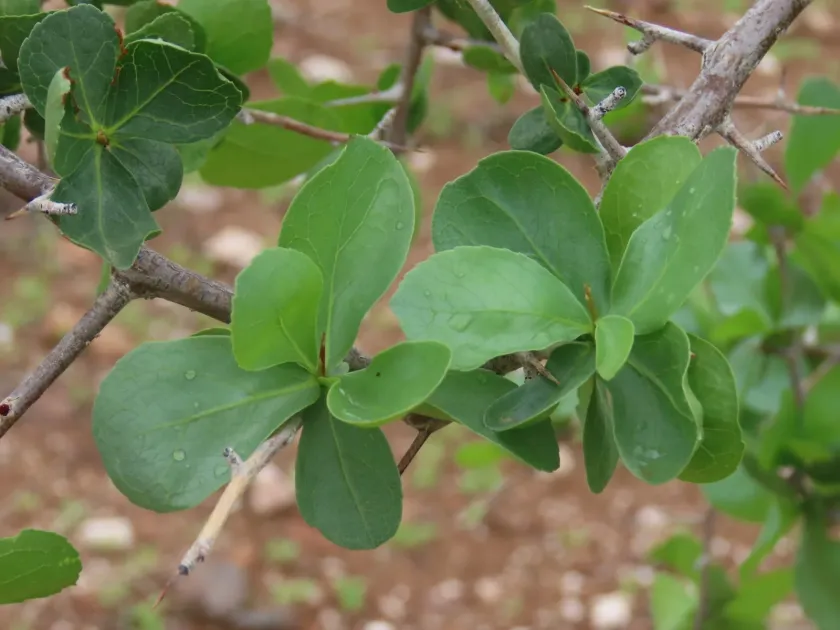
Description
Growing requirements
Commiphora glandulosa belongs to the Burseraceae family and is a deciduous tree native to the arid savanna regions of Southern Africa. It is biologically evolved to thrive in hot, dry environments with long periods of seasonal drought.
The plant requires full sun exposure to flourish and maintain its metabolic functions. It is highly sensitive to frost; therefore, commercial cultivation is restricted to tropical and subtropical climates where temperatures remain above 10 degrees Celsius throughout the year.
Soil requirements focus on excellent drainage. The plant naturally grows in rocky or sandy substrates. In a cultivated setting, heavy clay soils that retain water must be avoided to prevent root rot, which is a major physiological threat to this species.
Water management is critical during the establishment phase. While mature plants are extremely drought-tolerant, young seedlings require supplemental irrigation during their first year to build a sufficient root system.
Propagation is typically done through seeds or cuttings. Seeds require warmth to germinate, and cuttings should be taken during the dormancy period to ensure better survival rates when transplanted into the field.
Yield
The primary economic output of Commiphora glandulosa is its resin. This exudate is collected from the stem and branches, usually following minor incisions, though it may also occur naturally as the bark ages and cracks.
Yield efficiency is directly linked to the health of the tree and the environmental conditions. Higher temperatures often correlate with increased resin secretion, which is a plant defense mechanism against water loss and heat stress.
The resin extracted from this species contains unique terpenoids and essential oils that are highly prized in the pharmaceutical and cosmetic industries for their antiseptic and aromatic properties.
Besides resin, the tree provides biomass that contributes to the local ecology. However, because it is a slow-growing species, harvesting wood is not considered a viable commercial objective compared to the continuous extraction of resin.
Sustainable harvesting techniques are essential to maintain the long-term productivity of the trees, as excessive over-tapping can lead to structural weakness and increased susceptibility to secondary infections.
Main diseases and pests
Insects, particularly wood-boring beetles, represent the most significant threat to the health of Commiphora stands. These pests create galleries in the wood, disrupting nutrient transport and weakening the tree's overall stability.
Fungal pathogens pose a major risk in plantations where soil moisture is not carefully controlled. Infections often manifest as root rot, which can cause rapid tree death if the drainage conditions are not optimal.
Integrated pest management involves regular field patrols to identify early signs of infestation. Removing infested branches immediately is a recommended practice to stop the spread of borers to neighboring trees.
External damage caused by browsing herbivores in natural habitats can open wounds that act as entry points for pathogens. Protecting the perimeter of the planting site is a crucial step in modern agricultural management.
The application of pesticides is usually discouraged, as any chemical contamination of the bark or resin would diminish the quality of the raw material destined for the medicinal market.