
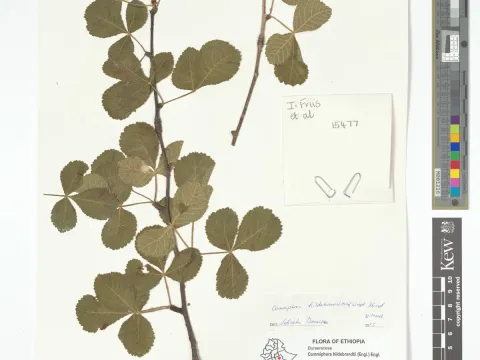
Commiphora hildebrandtii
Commiphora hildebrandtii
Commiphora hildebrandtii is a species of deciduous shrub or small tree belonging to the Burseraceae family. It is known for its distinctive appearance and the production of aromatic resins that are characteristic of the genus.
What the section contains
Commiphora hildebrandtii
The plant is native to the arid environments of East Africa, specifically in regions across Ethiopia, Somalia, and Kenya. It has evolved to survive in harsh, drought-prone climates where water is significantly limited for most of the year.
Success in cultivation requires well-draining soil, such as sandy or rocky substrates, to prevent root rot. This species is highly sensitive to waterlogged conditions, making proper soil aeration a primary requirement for a healthy root system.
Optimal growth conditions involve high solar radiation and warm temperatures ranging between 22 and 30 degrees Celsius. The plant requires full sun exposure to maintain its vigor and promote the accumulation of secondary metabolites within its tissues.
Commiphora hildebrandtii is utilized commercially for its resin, which finds applications in the perfume industry and traditional medicine. Its drought tolerance also makes it a valuable species for xeriscaping and sustainable landscaping in dry climates.
The primary threat to the health of the plant is root rot induced by overwatering. Excess moisture in the soil, particularly during dormant phases, creates an environment conducive to fungal pathogens that can destroy the root system quickly.
Insect pests such as spider mites and scale insects are common threats when the plant is kept in greenhouse or indoor conditions with poor ventilation. These pests target the foliage and young branches, sapping the plant of essential nutrients.
Fungal infections can manifest as leaf spots or stem lesions, often linked to high humidity levels and lack of air circulation. Maintaining a dry, well-ventilated environment is essential to mitigating the impact of these diseases.
Mechanical damage to the bark, while sometimes used for resin extraction, must be managed carefully to avoid providing entry points for bacteria and fungi. Standard sanitation practices are necessary to minimize the spread of infections during maintenance.
Effective management includes regular monitoring for early signs of infestation and ensuring that the plant is not kept in high-humidity zones. Chemical controls should be used judiciously, prioritizing cultural methods to maintain overall plant resilience.