
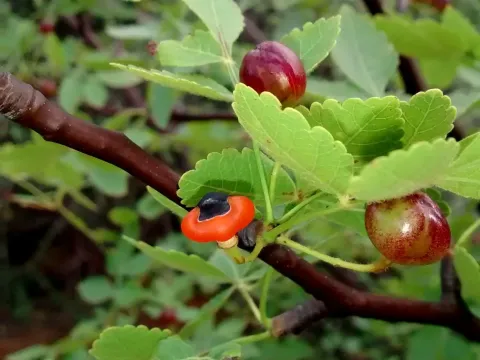
Bursera linanoe
Bursera linanoe
Bursera linanoe is a deciduous tree belonging to the Burseraceae family, native to the tropical dry forests of Mexico. It is economically significant due to the aromatic essential oils found within its wood and resin.
What the section contains
Bursera linanoe
The plant thrives in warm, arid climates and is highly adapted to tropical conditions with distinct seasonal droughts. It prefers rocky or sandy soils that provide excellent drainage, as the species is sensitive to waterlogged conditions.
Botanically, it features pinnate leaves and specific secretory ducts within the bark and sapwood. These structures are responsible for producing the fragrant compounds that make the tree a valuable agricultural asset.
Cultivation requirements include full sun exposure, which is critical for the biosynthesis of the essential oils. Proper spacing between trees is essential to ensure adequate airflow and sunlight penetration into the canopy.
From an agronomical perspective, maintenance involves minimal irrigation once the trees are established. Soil pH should ideally be neutral or slightly alkaline, reflecting the natural limestone-rich habitats of its native range in Mexico.
The primary commercial use of Bursera linanoe is the extraction of linaloe essential oil. This oil is highly prized in the fragrance and cosmetics industry for its delicate, floral, and woody notes.
Harvesting techniques typically involve selective pruning or the collection of fallen branches from mature trees. Steam distillation is the standard process used to isolate the aromatic oils from the wood chips.
The timing of the harvest is crucial, as the concentration of essential oil components, primarily linalool, fluctuates based on the age of the tree and the specific climatic conditions of the growing season.
Sustainable harvesting practices are essential to ensure the longevity of the resource. Modern plantations focus on systematic replanting and careful management of existing stands to maintain high yield levels over time.
The quality of the final product is assessed by the chemical composition of the oil, which is directly linked to the specific extraction methods and the post-harvest processing of the woody raw material.