
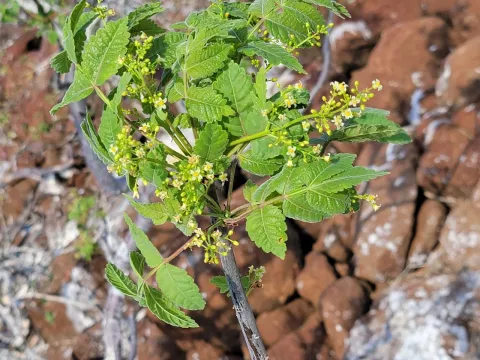
Bursera graveolens
Bursera graveolens
Propagating Bursera graveolens requires careful attention to seed preparation as the seeds possess a hard seed coat that needs softening before planting.
What the section contains
Bursera graveolens
Soaking seeds in lukewarm water for 24 hours prior to sowing in a sterile, well-draining seed starting mix is a standard practice for better germination.
The ideal time for sowing is at the beginning of the rainy season, as seedlings require consistent moisture to establish their root systems initially.
Seeds should be covered lightly with substrate, ensuring they are at a depth of about 1 centimeter to promote healthy sprouting under diffused light.
Keeping the germination environment warm and humid is essential, with temperatures ideally ranging between 22 and 26 degrees Celsius for optimal results.
Bursera graveolens, a member of the Burseraceae family, is a deciduous tree native to the tropical dry forests of South and Central America.
The species thrives in well-drained, sandy, or rocky soils and requires full sun exposure to maintain its metabolic processes for resin production.
It is highly drought-tolerant once established but needs a marked dry season to effectively develop the aromatic compounds within its heartwood.
Proper airflow is crucial for this species, as stagnant air can increase the risk of fungal infections within the dense canopy of the tree.
In an agricultural setting, maintaining a wide spacing between individual trees is necessary to prevent competition for nutrients and sunlight.
The primary economic output of Bursera graveolens is its resin-rich wood, which is utilized for its therapeutic and aromatic properties.
The yield of high-quality essential oil depends on the natural aging process of the wood, which must occur after the tree has fallen.
Commercial extraction typically involves steam distillation of the heartwood, which has matured under forest floor conditions for several years.
Yields are inherently low as the production of the specific aromatic oils is a slow biological process that cannot be forced by chemical fertilizers.
Farmers focused on sustainable cultivation prioritize the longevity of the tree and the gradual collection of fallen, mature wood over destructive harvesting.
Root rot is the most significant threat to Bursera graveolens, often caused by overwatering or soil that does not drain effectively.
Pests such as scale insects and spider mites can infest trees during periods of intense heat and low humidity, requiring integrated pest management.
Nutrient deficiencies, particularly involving trace minerals, can lead to leaf chlorosis and stunted growth in young saplings.
Regular monitoring of the foliage and trunk for signs of boring insects is critical to prevent structural damage to the wood.
Using preventive organic fungicides can help maintain tree health without compromising the natural aromatic purity required for final product sales.
Harvesting Bursera graveolens is a unique practice that involves the careful collection of fallen, dead branches from established trees.
The tree only develops its characteristic fragrant oils once it has died and remained on the forest floor for an extended period, often 5 to 10 years.
Harvesting should be done systematically, documenting the source of the wood to ensure it meets quality standards for oil distillation.
After collection, the wood is stripped of its outer bark and debris, then stored in dry, airy environments to prevent unwanted microbial growth.
Processing the wood requires specialized equipment for chopping or milling, ensuring that the precious aromatic resins are not lost during the stage of preparation.