
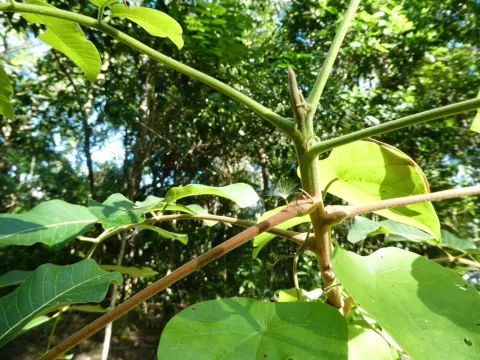
Canarium
Canarium
Canarium is a genus of tropical trees belonging to the Burseraceae family, primarily propagated through grafting to ensure the consistency of fruit quality and yield traits.
What the section contains


Canarium
Seed-based propagation is mainly reserved for breeding programs, where seeds are sown in nutrient-rich media immediately after extraction from the fruit flesh.
Seedlings are best transplanted into the field at the onset of the rainy season, which facilitates robust root establishment before the dry periods begin.
The spacing of the plantation is critical for long-term productivity, with recommendations typically ranging from 80 to 150 trees per hectare depending on the canopy architecture.
Proper pit preparation, including organic matter enrichment and subsoil aeration, provides the necessary environment for the young tree to thrive during its first year.
These trees are strictly tropical, requiring consistent high temperatures and protection from frost, as they are not adapted to withstand even short periods of cold stress.
Well-drained, deep, and fertile soils are essential, as waterlogged conditions quickly lead to root decay and the decline of the tree's overall health.
Canarium requires full sun exposure to maximize the photosynthetic rate, which is vital for the development of oil-rich kernels within the fruits.
Rainfall should be abundant and well-distributed throughout the year, though a short, mild dry period is often beneficial for the onset of flowering.
The trees perform best in environments with high humidity and protection from extreme wind, which can physically damage the branches and impact fruit set.
Canarium trees typically enter the initial stage of bearing fruit between five and seven years after planting, depending on the specific species and management.
As the tree matures, its capacity for fruit production increases significantly, providing a reliable source of income for smallholders and commercial farmers alike.
Harvesting is often labor-intensive as it involves manual collection of the ripe fruit as it falls or is picked from the branches over several weeks.
Yield stability is heavily influenced by soil fertility and the application of balanced nutrients during the peak vegetative and reproductive growth phases.
Modern pruning techniques are used to keep the tree size manageable, which enhances light penetration and increases the efficiency of the harvesting process.
Fungal diseases affecting the leaves and branches are major concerns, especially in regions with high humidity and poor air movement within the orchard.
Pest management programs focus on monitoring for beetles and caterpillars that can strip foliage and damage developing fruits, impacting total market value.
Root rot caused by poor soil drainage remains a critical threat, requiring preventative maintenance like installing proper drainage systems in the plantation.
Maintaining a healthy, clean orchard through regular sanitation pruning and debris removal significantly reduces the incidence of disease outbreaks.
Integrated pest management strategies, utilizing both biological controls and targeted applications, are recommended to maintain tree health sustainably.
The harvest period requires careful coordination to collect fruits at the peak of maturity, ensuring the oil content in the kernel is maximized.
Post-harvest processing involves the immediate removal of the fleshy pericarp, as fermentation or rotting of this outer layer can negatively affect kernel quality.
Drying the nuts under controlled conditions is essential to reach a moisture content that inhibits the growth of molds and ensures long shelf life.
Storage facilities must be secure, cool, and airy to protect the high-value oily nuts from pests, rodents, and humidity-induced degradation.
The final product is utilized in food processing for its unique nutty flavor and serves as a vital raw material for the extraction of premium plant oils.