
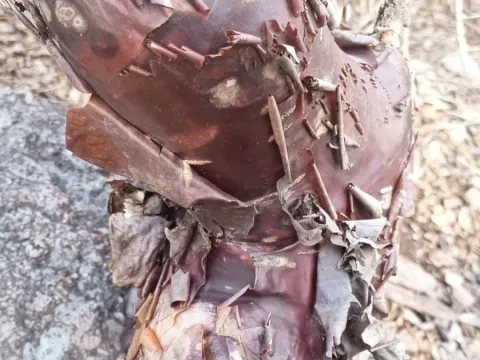
Bursera schlechtendalii
Bursera schlechtendalii
Bursera schlechtendalii is a woody species within the Burseraceae family, native to the arid tropical regions of Mexico. This plant is well-adapted to harsh environments, characterized by its ability to store water in its bark and trunk, which allows it to thrive during prolonged dry spells.
What the section contains
Bursera schlechtendalii
Growth requirements for this culture are primarily focused on high levels of solar radiation. As a heliophilous species, it requires several hours of direct sunlight daily to maintain its structural integrity and prevent etiolation, which is a common issue when growing indoors.
The soil for Bursera must be highly porous and inorganic. Standard potting mixes are unsuitable; instead, a mix composed of perlite, pumice, coarse sand, and a minimal amount of composted pine bark is recommended to ensure rapid drainage and avoid anaerobic conditions.
Climatic requirements are strictly tropical: the plant should be kept at temperatures above 15°C throughout the year. It possesses no frost tolerance, and even brief exposure to near-freezing temperatures can cause permanent damage to the cellular structure of the bark.
In terms of agricultural utility, Bursera schlechtendalii is primarily grown as an ornamental plant for botanical collections due to its interesting bark and silhouette. Additionally, the aromatic resins produced by this genus are studied for their potential bio-active compounds.
The most significant threat to the health of Bursera schlechtendalii is root rot, typically incited by over-irrigation or soil mixes with poor drainage. This condition quickly leads to systemic collapse of the plant's vascular system.
Common pests include mealybugs and spider mites. These organisms are particularly problematic in greenhouse environments where high temperatures and lack of air circulation create a perfect microclimate for their rapid multiplication.
Management of these threats involves strict irrigation control, where water is only applied after the substrate has completely dehydrated. This method mimics the natural cycle of the species and significantly reduces the risk of fungal infections.
Integrated pest management, including the use of horticultural soaps or specific systemic insecticides, should be implemented at the first sign of infestation to prevent the spread to other plants within the agricultural collection.
Ensuring adequate air movement around the canopy is a critical preventive measure, as it prevents the accumulation of humidity that favors the development of fungal spores and facilitates the survival of soft-bodied insects.