
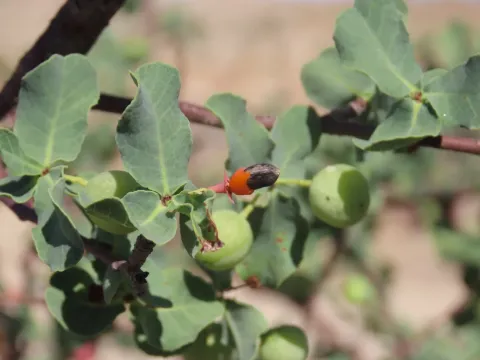
Blue-leaved commiphora
Commiphora glaucescens
Commiphora glaucescens, commonly referred to as the blue-leaved commiphora, is a perennial shrub belonging to the Burseraceae family. It is native to the arid landscapes of Southern Africa, exhibiting a high degree of specialization for desert environments.
What the section contains
Blue-leaved commiphora
The plant features a distinct glaucous or blue-grey foliage, which serves as a protective layer against high solar radiation. This species thrives in rocky or sandy substrates that allow for rapid drainage and prevent water accumulation around the taproot.
Cultivation requires a climate characterized by long, dry periods and intense sunlight. Commiphora is strictly sensitive to frost; therefore, cultivation is limited to tropical and subtropical arid zones or controlled greenhouse environments.
The agronomic management of this culture focuses on extreme drought tolerance. Supplemental irrigation should only be provided during the peak growth season, ensuring the soil profile remains porous and well-aerated throughout the year.
Propagation is typically achieved through stem cuttings or seeds, though the latter often requires scarification to improve germination rates in a controlled nursery environment.
The primary concern for farmers is root fungal infection, primarily caused by excessive humidity in the substrate. Once root rot commences, the plant's succulent tissues degrade rapidly, often leading to irreversible damage.
Sap-sucking insects, particularly scale insects and mealybugs, are frequent pests that prefer the protected crevices of the tree's bark, necessitating diligent inspection and pest management.
Foliar diseases, including various types of leaf spot, may occur if the plant is exposed to humid stagnant air conditions, especially in nursery or greenhouse settings.
Nematode infestations in the root zone can pose a significant challenge, as they often go undetected until significant nutrient deficiencies and wilting become visible in the canopy.
Integrated pest management strategies focusing on soil sterilization and quarantine of new stock are essential to maintaining the health and productivity of the plantation.