
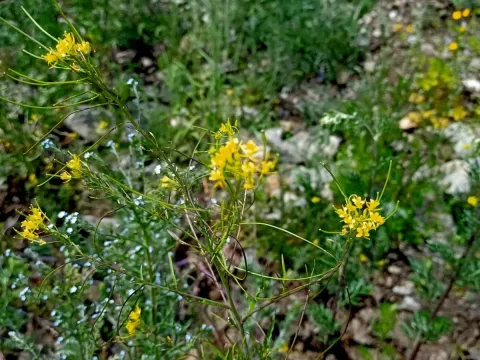
Sisymbrium heteromallum
Sisymbrium heteromallum
Sisymbrium heteromallum is a member of the Brassicaceae family. It typically requires early spring sowing when soil temperatures reach 6–8 degrees Celsius to optimize early vegetative development.
What the section contains
Sisymbrium heteromallum
The seeds should be sown at a shallow depth of approximately 1 to 2 centimeters. Proper seedbed preparation is essential to ensure uniform emergence and uniform stand density across the field.
The cultivation process requires attention to plant spacing, typically using row widths of 15 to 30 centimeters to allow for adequate air circulation and nutrient uptake.
Timing is critical, as the species is highly adapted to seed dispersal, so harvest or management practices must be synchronized with the plant's life cycle to maintain control.
Successful establishment depends on moisture availability during the first weeks, so pre-sowing irrigation may be beneficial in areas with dry spring conditions.
This crop is highly adaptable to various soil types, including loams and sandy soils, although it performs best in well-drained, nutrient-rich environments.
It is notably drought-tolerant, exhibiting a robust root system that allows the plant to sustain growth even during periods of limited rainfall.
Sunlight requirements are high, as the plant needs full exposure to ensure vigorous development and maximum biomass production throughout the growing season.
The plant thrives in soil with a neutral pH level, which helps in the efficient uptake of essential macronutrients like nitrogen, phosphorus, and potassium.
Avoiding waterlogging is crucial, as the root system of this species is susceptible to oxygen deprivation, which can lead to rapid decay in heavy or poorly drained soils.
Common pests associated with this species include flea beetles, which pose a significant risk to young seedlings and can cause severe damage during early growth stages.
Aphids and various moth larvae are also known to affect leaf development, leading to weakened plants and reduced yield potential if not managed appropriately.
Fungal diseases, such as downy mildew, are prevalent in high-humidity conditions, requiring farmers to maintain proper plant spacing for improved air movement.
Cultural practices such as crop rotation are vital to prevent the buildup of soil-borne pathogens and to disrupt the life cycles of common Brassicaceae pests.
Chemical control measures should be applied selectively, focusing on early intervention to mitigate the impact of infestations before they spread throughout the entire crop.