
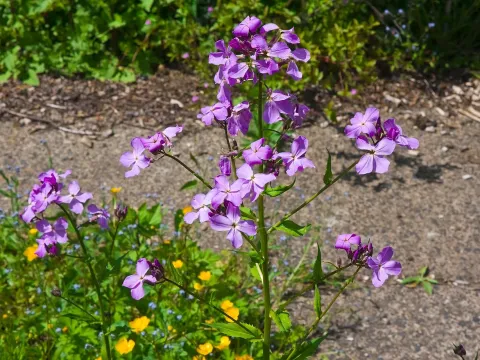
Dame's violet
Hesperis inodora
Sowing of Dame's violet (Hesperis inodora), a member of the Brassicaceae family, is typically conducted in early spring once soil temperatures reach 10–12°C. Late autumn sowing is also a viable option to ensure early germination during the following season.
What the section contains
Dame's violet
Seeds should be planted at a shallow depth of 1 to 1.5 cm. Recommended spacing involves rows 30–40 cm apart, allowing sufficient development space for the basal rosette of leaves during the plant's first year of growth.
Pre-soaking seeds in growth stimulants can significantly improve germination energy. Under favorable moisture conditions, initial shoots typically emerge within 14 to 20 days after sowing in the seedbed.
Thinning is a crucial stage of early development. Once true leaves appear, plants should be thinned to an interval of 20–25 cm to minimize competition for soil nutrients and sunlight.
The selection of a site with adequate sunlight is vital for successful establishment. Dame's violet requires bright conditions to develop a healthy root system and a robust vegetative structure before the flowering phase.
This crop thrives in fertile, well-drained loamy or sandy soils with a neutral to slightly alkaline pH. Poor drainage and waterlogging must be avoided, as the roots are highly susceptible to rot in saturated conditions.
Dame's violet prefers moderate climates with temperatures ranging from 18°C to 22°C. While it exhibits good winter hardiness, in regions with extreme frost and minimal snow cover, a light layer of mulch provides essential protection for the root zone.
Regular irrigation is necessary during dry spells to maintain plant vigor. Although the species has some drought tolerance, moisture consistency during the early vegetative stage is key to achieving optimal foliage growth.
Balanced mineral fertilization is recommended for sustainable production. Nitrogen-based fertilizers should be applied during the early season, while phosphorus and potassium are essential prior to the onset of the flowering cycle.
Weed control and soil aeration through inter-row cultivation help maintain plant health. Keeping the area free from competitive weeds reduces the risk of nutrient depletion and provides a clean environment for the plant to thrive.
The primary pest affecting the crop is the crucifer flea beetle, which can cause severe damage to young leaves. Protective covers or targeted biological treatments are often employed during the early stage of development to mitigate this risk.
Powdery mildew is the most common fungal disease, often triggered by high humidity and poor air circulation. Maintaining proper plant density and ensuring the site is well-ventilated are the best preventative measures.
Root nematodes can cause long-term growth inhibition. Because chemical control is difficult, strict adherence to crop rotation cycles is the most effective strategy to manage soil-borne pest populations.
Cabbage white butterfly larvae may also feed on the foliage. Manual monitoring and the use of non-toxic biological insecticides are recommended for small-scale cultivation to keep the pest population below economic damage thresholds.
Sanitation is key to disease management; removing all plant debris after the growing season is essential. This practice prevents the overwintering of pathogens and harmful insects, promoting a healthier crop in the subsequent year.