
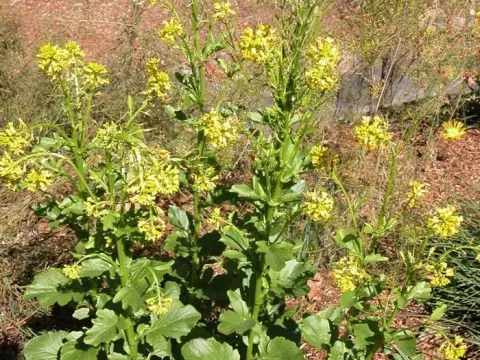
Southern wintercress
Barbarea australis
Southern wintercress (Barbarea australis) is a biennial or annual plant belonging to the Brassicaceae family. Sowing is typically performed in late summer or autumn, allowing the plants to establish a robust rosette before the onset of winter temperatures.
What the section contains
Southern wintercress
Spring sowing is conducted in cooler climates, though careful attention must be paid to temperature thresholds. The plant is sensitive to the combination of warming temperatures and increasing day length, which triggers reproductive growth.
Seed depth should be kept shallow, between 1 to 2 centimeters, to ensure successful germination. Using a seed drill followed by light rolling is the recommended method to maintain soil-to-seed contact.
The seeding rate for biomass production is generally higher compared to seed production, aimed at ensuring full canopy closure and suppressing weed development in the early growth stages.
Proper field leveling is essential to avoid water ponding around the seeds, which can cause rotting during germination and lead to patchy stands that are difficult to manage later.
Barbarea australis thrives in moist, fertile, loamy soils with a neutral pH. It exhibits poor performance in highly acidic or waterlogged conditions, making proper soil testing a prerequisite for successful cultivation.
Regarding climate, the plant shows strong cold tolerance, capable of surviving harsh winters if properly established. It requires a cool, moist growing season to reach its full potential in vegetative biomass production.
Moisture management is critical during the active growing phase. The crop requires steady hydration to avoid premature bolting, which is a common physiological response to drought or heat stress in this species.
The plant performs best in open, well-drained locations with full sun exposure. While it can handle partial shade, maximum yield is achieved in areas where light intensity promotes consistent photosynthetic activity.
Nutrient requirements focus on nitrogen and phosphorus, applied in early spring to fuel the rapid biomass accumulation phase before the flowering stage begins in late spring or early summer.
The primary pests affecting Southern wintercress are flea beetles, which can devastate early seedling stages. Regular monitoring and, if necessary, integrated pest management practices are essential to protect the crop.
Fungal diseases, including downy mildew and alternaria leaf spot, are prevalent in areas with high humidity and poor airflow. Managing plant density and ensuring proper spacing can significantly reduce disease pressure.
Crop rotation is the most effective cultural method to prevent the buildup of soil-borne pathogens. Avoiding other brassica crops for several years in the same field is a standard agronomic recommendation.
Weed management is vital, especially during the establishment phase. While the crop grows vigorously once established, early competition from weeds can significantly reduce the potential yield.
Use of certified, disease-free seed is the first line of defense. Proper sanitation of farming equipment between fields also helps prevent the spread of weeds and infectious agents across the agricultural operation.