
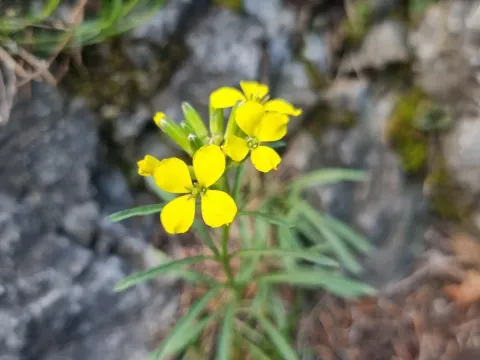
Woodland wallflower
Erysimum sylvestre
Woodland wallflower (Erysimum sylvestre) is a herbaceous plant belonging to the Brassicaceae family. It is naturally distributed across forested and mountainous regions in Europe, where it thrives in semi-shaded to sunny environments with stable climate conditions.
What the section contains
Woodland wallflower
The crop requires well-draining, sandy-loam soils to prevent root rot. It is sensitive to waterlogging, so site selection should prioritize areas with natural slope or high permeability, ensuring that soil aeration remains optimal for root development.
In terms of climate, the plant is hardy and adapts well to temperate zones. It requires sufficient sunlight to synthesize active compounds, specifically cardiac glycosides, which are the main focus for its commercial cultivation in the pharmaceutical sector.
Agricultural management requires meticulous weed control during the seedling stage, as the plant competes poorly with aggressive weeds. Fertilization strategy should focus on balanced NPK applications to encourage vegetative growth without excessive nitrogen, which can reduce active substance concentration.
The cultivation is generally low-input, focusing on sustainable practices that protect the biodiversity of the surrounding ecosystem. Regular monitoring of growth stages is essential to determine the precise timing for harvesting the aerial parts.
Cruciferous flea beetles represent the most significant pest pressure for young plants. Farmers often employ physical barriers or early-season insecticide treatments to maintain plant stand density during the critical establishment phase.
Fungal diseases like downy mildew can occur during periods of high humidity and poor air circulation within the field. Maintaining proper row spacing is the most effective preventative measure to ensure canopy health.
Root-knot nematodes can inhibit nutrient uptake and stunt growth. Crop rotation with non-host plants or the use of specific bio-fumigants can reduce soil pathogen levels significantly.
Aphids often colonize the flower buds, necessitating careful scouting during the reproductive stage. Integrated pest management (IPM) protocols are recommended to mitigate damage while preserving beneficial insect populations.
Strict adherence to sanitary practices, such as removing crop residues, helps in reducing the overwintering population of major pests and pathogens, ensuring cleaner production cycles in subsequent years.