
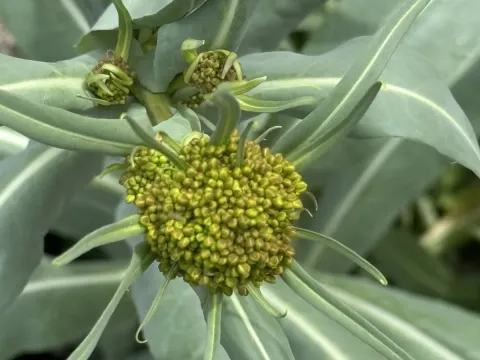
Woad
Isatis
Woad is a biennial plant, and its sowing schedule depends on the intended end-use of the crop. In temperate climates, sowing is typically performed in early spring as soon as soil temperatures reach 5-8 degrees Celsius.
What the section contains

Woad
Late autumn sowing is also a viable option. This method allows the seeds to undergo natural stratification in the soil, which helps ensure uniform and vigorous germination as soon as early spring weather conditions allow.
The recommended seeding rate ranges from 10 to 15 kilograms per hectare. Row spacing should be maintained between 45 and 60 centimeters to facilitate adequate air circulation and simplify maintenance activities during the growing season.
Seeds should be sown at a depth of no more than 2 centimeters. Placing seeds deeper can delay emergence and deplete the seedling's energy reserves, which is critical for establishing a high-quality stand early on.
Selecting clean, weed-free plots for sowing is essential. Proper soil compaction after sowing ensures good seed-to-soil contact, which is vital for a successful start for the crop in its first year of vegetation.
Woad demonstrates high adaptability to various climatic conditions, being both frost-tolerant and resilient to short-term drought. It thrives in most temperate agricultural regions without the need for extensive climate control.
The ideal soil types for woad are light loams or sandy soils that provide excellent drainage and aeration. Soil pH should be near neutral, as overly acidic soils can severely inhibit the development of the taproot system.
Woad is highly sensitive to waterlogging. Fields with high water tables or areas where water tends to pool after rain are unsuitable for cultivation, as the roots are prone to rapid decay and fungal infections.
During the first year of growth, the plant forms a large rosette of leaves, requiring consistent soil moisture. In extended drought conditions, irrigation is necessary to support biomass accumulation.
Fertilization must be balanced. Excessive nitrogen application in the second half of the season can negatively affect the biosynthesis of dye precursors, so phosphorus and potassium-rich fertilizers are generally preferred.
Woad yield is measured primarily by the volume of green biomass, which serves as the raw material for indigo extraction. On average, yields range from 15 to 25 metric tons of raw leaves per hectare.
The peak concentration of dye pigments occurs just before the transition to the flowering phase. Timely harvesting at this specific physiological stage is crucial for ensuring high-quality raw materials.
Modern agrotechnical practices allow for multiple harvests of leaves within a single growing season. After each cutting, the plants show rapid regrowth, provided there is adequate water and nutrition available in the soil.
In the second year of life, the plant produces a flower stalk, which significantly decreases leaf quality for dye production. Consequently, plantations are typically harvested intensively for only one or two years at most.
Advanced processing methods allow for the extraction of the valuable pigment with high purity. Optimizing growth conditions can increase economic efficiency by 15-20% compared to traditional, low-input farming methods.
As a member of the Brassicaceae family, woad is highly susceptible to flea beetles. These pests can cause devastating damage to young seedlings in a very short time, requiring diligent scouting and monitoring.
Cabbage moth larvae and other caterpillars are significant threats that feed on the leaf tissues, reducing both the overall yield and the quality of the harvested product. Integrated pest management is recommended.
Powdery mildew and downy mildew are the primary fungal pathogens affecting woad. These diseases spread rapidly in high-humidity conditions, emphasizing the importance of proper plant spacing and airflow.
Clubroot is a serious threat, especially when crop rotation is neglected. Once a field is infested with the clubroot pathogen, woad should not be grown on that site for at least 5 to 7 years.
Effective disease prevention relies on the use of clean seed, thorough weed control to eliminate alternative hosts, and regular inspection of the fields to manage localized outbreaks before they spread.
Harvesting should be conducted in dry weather to facilitate easier drying and initial processing. Leaves should be cut at a height of 5-10 centimeters above the ground to avoid damaging the crown of the plant.
The harvested green material is perishable and requires immediate processing. If transit to the processing facility is delayed, the leaves should be stored in a cool, well-ventilated area to prevent degradation.
Seed production requires a separate harvest approach. Seed stalks are cut once the pods turn brown. Caution must be exercised to minimize seed loss caused by shattering during the cutting and transport phases.
Following the harvest, field cleanup involves incorporating remaining organic matter into the soil to improve its structure. This practice provides a small but valuable source of nitrogen and minerals for the soil.
Efficiency in harvesting is heavily dependent on specialized machinery designed for leaf crops. Using harvesters that minimize physical trauma to the leaf tissue is essential to maintaining the integrity of the dye compounds.