
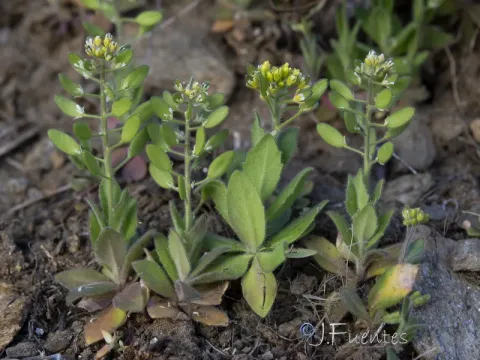
Yellow whitlow-grass
Draba lutescens
Yellow whitlow-grass (Draba lutescens) is a botanical species belonging to the Brassicaceae family. It is a perennial herbaceous plant originally native to alpine and subalpine zones, where it thrives in harsh, rocky, and low-nutrient environmental conditions.
What the section contains
Yellow whitlow-grass
The plant exhibits remarkable adaptation to cold climates, showing high resilience to frost during its early vegetative stages. It is typically found in well-drained soils, reflecting its evolutionary preference for habitats with minimal water accumulation.
In terms of agricultural suitability, the plant requires sites with high light intensity to sustain its development. It is particularly effective for stabilization of rocky terrains, where other, more nutrient-demanding crops might fail to establish themselves.
Soil structure should be primarily loose and aerated. While the plant can tolerate nutrient-poor soils, it benefits from balanced mineral compositions that promote reproductive success and seed production, which is a key agronomic goal.
Crop management focuses on maintaining a sparse canopy to prevent the competition of aggressive weeds, which are often the primary limiting factor for the growth of yellow whitlow-grass in non-natural, managed environments.
As a member of the Brassicaceae family, yellow whitlow-grass is susceptible to common cruciferous pests. Flea beetles represent the most significant threat, as they frequently target the tender leaf tissues of the plant during the early growth phase.
Pathogenic fungi are another area of concern, particularly those that thrive in moist environments. Conditions such as powdery mildew or downy mildew can compromise the health of the plant if airflow is insufficient between individuals.
Effective management includes regular monitoring for leaf discoloration or signs of insect damage. Preventing water stagnation through proper drainage is a critical cultural practice to mitigate the risk of root pathogens.
Integrating biological controls is recommended for sustainable crop protection. This minimizes the reliance on synthetic chemicals and preserves the beneficial microflora associated with the plant’s root zone.
Field sanitation protocols should be strictly observed, including the removal of infected plant debris at the end of the season to interrupt the life cycle of specialized pests and pathogens residing on the crop remnants.